
Aluminum rapid prototyping helps product teams turn digital designs into accurate, functional metal parts in a short time. It is widely used when a prototype must do more than demonstrate appearance: it may need to fit into an assembly, carry a load, dissipate heat, or withstand real-world testing.
Compared with plastic prototypes, aluminum parts can offer greater stiffness, durability, and heat resistance. They can also closely resemble production components, making them valuable for engineering validation and pre-production trials. This article explains the main aluminum prototyping methods, their benefits and limitations, and how to choose the right approach for a project.
What Is Aluminum Rapid Prototyping?
Aluminum rapid prototyping is the process of making prototype parts from aluminum using digital design data and manufacturing techniques such as CNC machining, metal additive manufacturing, sheet metal fabrication, and casting.
“Rapid” generally means producing parts without the time and investment associated with full production tooling. Actual lead time depends on the part’s size and complexity, the chosen process, finishing requirements, inspection needs, and supplier schedule.
Why Use Aluminum for Prototypes?
Aluminum is popular in product development because it combines useful engineering properties with broad manufacturing availability.
Low weight
Aluminum is considerably lighter than many other structural metals, including steel. This can be useful for portable devices, vehicles, robotics, and aerospace-related projects, where weight affects performance and handling.
Strength and stiffness
Aluminum can produce rigid, durable prototypes. The actual strength depends on the alloy, temper, manufacturing method, and part design, so the selected material should match the intended test.
Heat dissipation
Aluminum conducts heat well compared with many plastics. It is frequently used for heat sinks, housings, thermal test parts, and components that must spread heat.
Corrosion resistance
Aluminum naturally develops a protective oxide layer. Depending on the environment, alloy, and surface finish, additional treatments such as anodizing may be used to improve corrosion resistance or appearance.
Production-like testing
An aluminum prototype can help engineers evaluate an assembly using a real metal part rather than a plastic substitute. This can reveal issues related to stiffness, weight, thermal behavior, threading, fastening, and manufacturing fit.
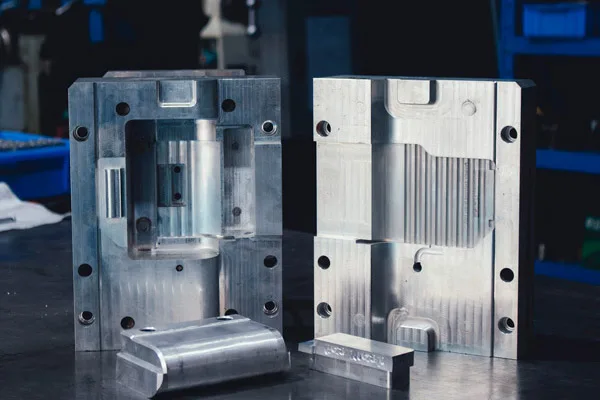 Which Method Is Used for Aluminum Rapid Prototyping?
There is no single method for making aluminum prototypes. The right process depends on geometry, quantity, tolerances, performance requirements, and budget.
CNC machining
CNC machining removes material from aluminum stock using computer-controlled cutting tools. It is widely used for parts requiring accurate dimensions, functional interfaces, holes, threads, or flat surfaces.
- Best suited to: Brackets, housings, mounts, plates, and mechanical components.
- Advantages: Good accuracy, broad alloy availability, and durable parts suitable for functional testing.
- Considerations: Tool access can restrict geometry, and complex parts may require multiple setups. Material is also removed during production, creating some waste.
Metal 3D printing
Metal additive manufacturing creates parts layer by layer from metal powder or wire. It can produce complex structures, internal channels, and lightweight geometries that may be difficult to machine.
- Best suited to: Complex shapes, consolidated assemblies, and parts with challenging internal features.
- Advantages: Design freedom and potential reduction in the number of separate components.
- Considerations: Parts may need support removal, heat treatment, machining, or surface finishing. Cost and lead time depend on the process, part size, and post-processing needs.
Sheet metal fabrication
Sheet metal fabrication cuts and bends aluminum sheet into formed components. Parts may be joined by fasteners, welding, or other methods.
- Best suited to: Enclosures, panels, covers, chassis, and brackets.
- Advantages: Efficient for thin-walled designs and often representative of a common production route.
- Considerations: Bend radii, material thickness, holes near bends, and joining methods should be considered during design.
Aluminum casting
Casting forms a part by pouring molten aluminum into a mold. It can be useful for shapes that are difficult to machine from solid stock or for producing several similar components.
- Best suited to: Bulkier, contoured parts and certain repeated prototype quantities.
- Advantages: Can create complex external shapes and reduce the need to remove large amounts of stock.
- Considerations: Tooling or pattern preparation may be needed. Cast parts may require machining, and properties can vary with the casting process and design.
How to Choose a Prototyping Method
Consider the following questions when selecting a process:
What will the prototype be used for? Appearance reviews, fit checks, load testing, and thermal testing may call for different materials and processes.
How complex is the geometry? CNC machining is suitable for many accessible features; additive manufacturing may help with complex internal shapes; sheet metal fabrication suits formed panels and enclosures.
Which dimensions are critical? Identify interfaces, holes, threads, and surfaces that require specific tolerances or inspection.
How many parts are needed? Quantity can affect the relative cost and practicality of machining, additive manufacturing, and casting.
Does the prototype need to represent the production process? A prototype made using a production-relevant method can reveal process-specific challenges, but may involve additional setup or tooling.
What finishing or testing is required? Account for machining, anodizing, heat treatment, assembly, and inspection when planning the project.
Aluminum’s Role in Modern Manufacturing
Aluminum remains important in manufacturing because it can be machined, formed, cast, joined, and—using suitable alloys and processes—additively manufactured. Its low weight can benefit transportation and portable products, while its thermal conductivity makes it useful in heat-management applications. Machining can produce accurate components, and surface treatments can provide particular finishes or improve performance in specific environments.
For product development, aluminum prototypes can help engineers assess a design and explore how a part might be made, assembled, and finished. The prototype’s results should be interpreted in light of its alloy and manufacturing process. Aluminum is not suitable for every application; cost, wear, chemical exposure, weight targets, and other performance requirements may favor a different material.
Why Choose Aluminum for Prototyping?
Clients often choose aluminum prototyping when plastic models are not sufficient to evaluate the product.
Functional testing: An aluminum prototype can be tested for stiffness, fastening, thermal behavior, vibration, and assembly fit. It can reveal issues that may be missed with a visual model or a material with very different properties.
Lightweight, durable parts: Aluminum can provide a robust prototype without the weight of steel. This is useful for products where every gram affects movement, transport, or user experience.
Accurate interfaces: Machined aluminum prototypes can incorporate mounting surfaces, holes, threads, and other features needed to test an assembly. Critical dimensions can be specified for measurement and inspection.
Production insight: A prototype made using a likely production method can expose manufacturing challenges before production begins. Design teams can assess tool access, forming constraints, assembly requirements, and finishing needs.
Design and stakeholder reviews: A finished metal part can provide a realistic representation of a product’s appearance, weight, and feel. This can support internal reviews, customer feedback, and demonstrations.
Faster iteration than production tooling: Rapid methods can help teams make and revise parts without immediately investing in full-scale production tooling. The time saved depends on the process, part complexity, finishing, and supplier schedule.
Conclusion
Aluminum rapid prototyping gives product teams a practical way to test designs using durable, production-relevant metal parts before committing to full-scale manufacturing. From CNC machining and metal 3D printing to sheet metal fabrication and casting, each method offers different benefits for accuracy, complexity, cost, and lead time. The best choice depends on the part’s intended use, material requirements, geometry, and production goals.
With careful process and material selection, prototypes can help identify design issues, validate performance, and improve the transition to production. Danke Mold supports product development with prototyping and manufacturing solutions tailored to project requirements, helping turn concepts into precise, functional components.