
Vacuum casting for pre-production parts is a practical manufacturing method for producing small batches of detailed, realistic components before investing in full-scale production. It gives product teams a way to assess a design’s appearance, fit, and function using parts that can closely resemble finished products.
For businesses developing a new product, the pre-production stage is an important opportunity to identify problems while changes are still relatively easy and affordable. Vacuum casting can help bridge the gap between early prototypes and mass production by providing multiple high-quality parts without the cost and lead time of hardened production tooling.
What Is Vacuum Casting?
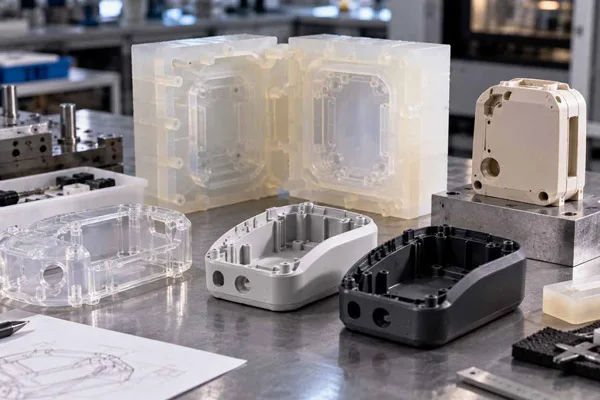
Vacuum casting is a low-volume manufacturing process that uses a master pattern, a silicone mold, and liquid casting resin. The master pattern is used to create a mold, and resin is then poured into that mold under vacuum. Removing air from the casting environment helps reduce bubbles and capture fine details.
The master pattern is often made using 3D printing or CNC machining. Once the silicone mold is ready, it can be used to produce a limited number of duplicate parts. The finished castings can be trimmed, painted, polished, or otherwise finished to meet project requirements.
Because silicone molds are less expensive and quicker to produce than metal injection-molding tools, vacuum casting is particularly useful when a project needs a small production run or several design samples.
Why Use Vacuum Casting for Pre-Production Parts?
Pre-production parts help teams understand how a product will look and work before they commit to a larger manufacturing investment. Vacuum casting is well suited to this stage for several reasons.
Lower tooling costs
Injection molding requires a production mold, which can involve substantial upfront expense. Vacuum casting uses a silicone mold made from a master pattern, so the initial tooling investment is generally lower.
This makes the process a good fit for companies that want to test a design, build a pilot batch, or produce samples before deciding whether to proceed with injection molding.
Faster design evaluation
A physical part can reveal issues that may not be obvious in a CAD model or a single prototype. Teams can use vacuum-cast parts to check assembly, clearances, ergonomics, and appearance.
If the design needs changes, it may be possible to update the master pattern and create a new silicone mold without investing in a full production tool. This can support a more flexible development process.
Detailed, realistic parts
Vacuum casting can reproduce complex shapes, small features, and surface textures. This makes it useful for prototypes that need to look close to the intended product, such as customer samples, product demonstrations, or trade-show models.
Depending on the resin and finishing method, parts can be produced in a range of colors and surface appearances. Some resins can also imitate the look or feel of common plastics.
A range of resin properties
Casting materials are available with different characteristics. Depending on the supplier’s options, teams may be able to select resins that are rigid, flexible, transparent, impact-resistant, or soft to the touch.
These materials do not automatically behave exactly like injection-molded production plastics. However, the right casting resin can provide useful information about how the design handles and assembles, and whether its overall form is suitable for further development.
Practical small-batch production
Vacuum casting is designed for limited quantities rather than mass production. It can be used to make parts for engineering reviews, pilot builds, market research, sales presentations, or early customer testing.
This is especially valuable when a team needs more than one prototype but does not yet need thousands of parts.
How the Vacuum Casting Process Works
The exact workflow varies by manufacturer, but vacuum casting typically includes the following stages.
Step 1: Create the master pattern
The master pattern represents the part that will be copied. It is commonly made using 3D printing or CNC machining, depending on the required dimensions, surface finish, and level of detail.
The quality of the master has a major effect on the final cast parts. Any visible marks, surface defects, or dimensional inaccuracies may be reproduced in the silicone mold.
Step 2: Prepare the silicone mold
The master pattern is positioned in a mold box, and liquid silicone is poured around it. The silicone cures to form a flexible mold. Once cured, the mold is opened and the master is removed, leaving a cavity in the shape of the part.
Mold design matters. The manufacturer must consider how resin will enter the cavity, how air will escape, and how the finished part can be removed without damage.
Step 3: Mix and prepare the casting resin
The selected resin is measured and mixed, often with colorants or other additives. The material must be prepared according to its working time and curing requirements.
Some resins are sensitive to mixing ratios, temperature, and handling conditions. Following the supplier’s process helps achieve consistent results.
Step 4: Cast the part under vacuum
The resin is poured into the silicone mold, which is placed in a vacuum chamber. The vacuum helps remove air and reduces the chance of bubbles becoming trapped in the part.
The mold is then left to cure under the required conditions. Depending on the material and part design, curing may take place at room temperature or with controlled heating.
Step 5: Demold and finish
Once the resin has cured, the part is removed from the silicone mold. Excess material, such as gates or flash, is trimmed away. Additional finishing may include sanding, painting, polishing, or applying a surface coating.
The finished part can then be inspected and used for assembly checks, presentations, or testing.
 Common Applications for Vacuum-Cast Parts
Vacuum casting is used across a range of industries and product-development stages. Common applications include:
- Product design and engineering prototypes
- Enclosures, housings, covers, and panels
- Fit and assembly testing
- Visual models and presentation samples
- Low-volume product launches
- Pilot builds and pre-production trials
- Sales samples and trade-show displays
- Replacement parts or components needed in small quantities
The process is particularly useful when a part has a complex shape or needs a more finished appearance than a basic early-stage prototype.
Vacuum Casting Compared with Other Manufacturing Methods
Choosing the right process depends on quantity, budget, timing, material requirements, and how closely the parts need to match the final production component.
Vacuum casting vs. injection molding
Vacuum casting generally has lower upfront tooling costs and is more suitable for small batches. Injection molding usually requires a larger initial investment, but it becomes more economical when producing high quantities of parts.
Injection molding is also the more appropriate choice when the project needs production-grade materials, repeatable large-scale output, or parts that must meet specific production requirements. Vacuum casting can help validate a design before that investment is made.
Vacuum casting vs. 3D printing
3D printing can be an efficient way to create a one-off prototype or test a design quickly. Vacuum casting is often more useful when several similar parts are needed, particularly when appearance and surface detail are important.
The two processes can also work together: a 3D-printed master pattern may be used to create the silicone mold for vacuum casting.
Vacuum casting vs. CNC machining
CNC machining can produce accurate parts directly from a block of material and may be suitable for functional prototypes. Vacuum casting can be a more practical option for producing multiple copies of a detailed part, depending on its geometry and material requirements.
Neither process is best for every project. The right choice depends on what the parts need to demonstrate and how many are required.
What to Consider Before Ordering Pre-Production Parts
Careful planning can help ensure that vacuum casting meets the needs of a development project. Before requesting a quote, consider the following.
Part quantity
Estimate how many parts are needed for the current stage and whether additional batches may be required. Silicone molds have a limited working life, and the number of usable castings depends on the mold, resin, part geometry, and process conditions.
Material requirements
Identify whether the part needs to be rigid, flexible, transparent, impact-resistant, or capable of withstanding a particular environment. Share any testing requirements with the manufacturer before selecting a resin.
If the part must meet a precise production-material specification, ask whether vacuum casting is suitable or whether another process is needed.
Critical dimensions and tolerances
Not every dimension has the same importance. Mark the measurements that affect fit, movement, sealing, or assembly. Discuss acceptable tolerances with the supplier, since achievable accuracy can depend on part size, geometry, mold design, and material behavior.
Surface finish and color
Explain whether the parts are intended for engineering evaluation or customer-facing presentation. Requirements for color matching, texture, gloss, paint, or polishing may affect both cost and lead time.
Providing reference images, color samples, or finish specifications can help reduce misunderstandings.
Master pattern quality
The master pattern is the foundation of the mold. Make sure its surface finish and dimensions are appropriate for the final use. If the master has visible layer lines, scratches, or other defects, those details may appear on the cast parts.
Testing purpose
Be clear about what the parts will be used for. A part intended for a visual review may have different requirements from one used for assembly testing or a short-term functional trial. The intended use helps the manufacturer recommend suitable materials and finishing options.
Advantages and Limitations
Vacuum casting offers several advantages for product development:
- Lower initial tooling investment than many production processes
- Short-run manufacturing capability
- Good reproduction of fine details
- Options for different colors and material characteristics
- Useful parts for design reviews and pilot builds
There are also limitations to keep in mind:
- Silicone molds wear out and produce a limited number of parts.
- Casting resins may not match the properties of production plastics.
- Part dimensions and surface quality can vary with geometry and process conditions.
- The process is not generally economical for large-scale production.
- Finishing and post-processing may be required.
Understanding these trade-offs helps teams use vacuum casting where it is most effective: validating and presenting designs before a larger manufacturing commitment.
How to Choose a Vacuum Casting Supplier
A reliable supplier should be able to discuss the complete process, not just provide a price per part. When evaluating a manufacturer, ask about:
- Experience with similar part shapes and applications
- Available resin options and their properties
- Expected mold life and batch size
- Tolerances and inspection methods
- Color and surface-finishing capabilities
- Typical project lead times
- How design changes will affect cost and schedule
Sharing a 3D model, drawings, quantity, material expectations, and intended use will help the supplier provide a more accurate recommendation.
Conclusion
Vacuum casting for pre-production parts gives product teams a practical way to make small batches of detailed components before committing to full-scale manufacturing. It can support design reviews, assembly checks, customer demonstrations, pilot builds, and early market testing—all while avoiding the upfront cost of production tooling.
The process is most effective when the project’s quantity, material needs, tolerances, and finish expectations are clearly defined. By selecting an appropriate resin, preparing a high-quality master pattern, and working with an experienced supplier, businesses can use vacuum casting to identify design issues, gather feedback, and make more confident decisions about the next stage of production.