
Injection molding is a core manufacturing process behind many of the plastic products used in healthcare. From disposable syringes and diagnostic components to equipment housings and surgical instrument handles, it helps manufacturers produce detailed parts in high volumes with consistent dimensions.
Medical devices place demanding requirements on their components. Parts may need to be precise, reliable, easy to use, and compatible with cleaning, sterilization, or controlled manufacturing environments. Injection molding can support these needs—but its success depends on thoughtful design, suitable materials, qualified production processes, and appropriate quality controls.
What Is Medical Injection Molding?
Injection molding forms plastic parts by melting polymer resin and injecting it under pressure into a mold. The plastic cools and solidifies, and the finished part is ejected. The cycle can then repeat.
A process includes:
1. Material preparation: Resin is selected, stored, and prepared according to its processing requirements.
2. Plasticizing: The resin is heated until it reaches a molten state.
3. Injection: Molten plastic is forced into a closed mold.
4. Cooling: The material cools and takes the shape of the mold cavity.
5. Ejection: The finished component is removed.
6. Inspection and further processing: Parts are checked, and may be assembled, packaged, or subjected to additional operations.
Why Manufacturers Use Injection Molding
High-volume production
After a mold and process have been developed, injection molding can produce repeated parts at a relatively high rate. This can make it suitable for products with predictable demand and large production volumes.
The economics depend on factors such as mold complexity, cycle time, material, production volume, and inspection requirements. Tooling can require substantial initial investment, so the process should be evaluated across the product’s expected lifecycle.
Repeatable geometry
A properly developed process can make parts with consistent shapes and dimensions. This repeatability can support assembly and performance, especially where components mate with one another or fit into automated equipment.
Consistency is not automatic. It depends on stable materials, well-maintained tooling, controlled process settings, and an effective inspection plan.
Complex features
Injection molding can create features such as thin walls, ribs, bosses, snaps, channels, and curved surfaces. Integrating multiple features into one part can reduce the number of components and assembly steps.
Designers must still account for practical molding limits. Wall thickness, draft angles, gate locations, flow paths, and ejection all influence whether a design can be molded reliably.
Material options
A range of thermoplastics can be considered for medical applications, depending on the product’s needs. Material properties may include strength, flexibility, transparency, chemical resistance, impact performance, or heat tolerance.
A resin’s suitability depends on more than its general properties. The final selection must consider the specific grade, manufacturing process, intended use, cleaning or sterilization conditions, and applicable product requirements.
Lightweight components
Plastic parts are often lighter than comparable metal components. This can be useful for portable equipment and handheld instruments, where weight can affect transportation, handling, and user comfort.
Potential part consolidation
Features that would otherwise require separate components may sometimes be molded into one part. Part consolidation can simplify assembly and reduce the number of interfaces, though the design must remain manufacturable and easy to inspect.
Where Injection-Molded Parts Are Used
Injection-molded components are found throughout the medical industry. Their roles range from simple protective covers to parts that perform important mechanical or fluid-handling functions.
Diagnostic devices
Diagnostic equipment often contains molded housings, sample-handling components, trays, holders, and test-device bodies. These parts may need precise features so samples, sensors, or components align correctly.
For single-use diagnostic products, molding can support large production volumes. For reusable equipment, the material and design must be suited to the device’s intended cleaning and disinfection procedures.
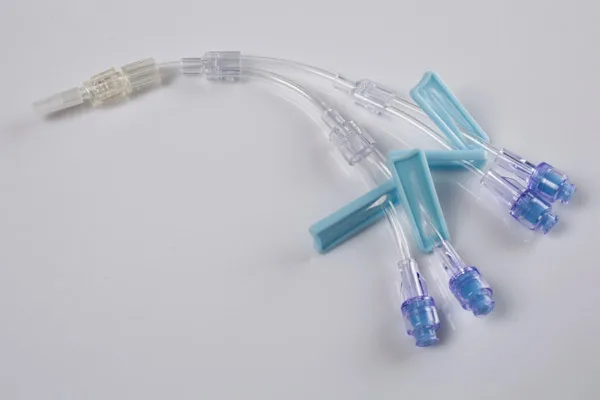
Fluid-management components
Many healthcare products require components that guide, contain, or control fluids. Examples may include connectors, manifolds, tubing-related components, reservoirs, and portions of fluid-delivery systems.
These parts can require carefully controlled dimensions and surface quality. Their design may need to limit leakage, support secure connections, and avoid features that could interfere with fluid flow or cleaning.
Surgical and examination instruments
Plastic components are used in instrument handles, grips, covers, and operating mechanisms. Injection molding can create ergonomic shapes and integrate features such as ribs, channels, clips, and attachment points.
In some designs, molding is combined with other processes. For example, insert molding can integrate a metal shaft or threaded feature into a plastic handle.
Medical equipment housings
Equipment such as monitors, pumps, diagnostic instruments, and treatment systems may use molded plastic covers and internal components. These parts can protect sensitive electronics, organize internal assemblies, and provide controls or user interfaces.
The housing design may need to account for impact resistance, ventilation, electrical insulation, heat, cleaning, and access for maintenance.
Laboratory and sample-handling products
Laboratories use many molded products, including racks, holders, dishes, tubes, containers, and components for automated instruments. Consistent dimensions can be important where parts must fit equipment, hold samples, or work with automated handling systems.
Disposable medical products
High-volume disposable products may benefit from the speed and repeatability of injection molding. Depending on the device, molded components may be used in products such as syringe parts, diagnostic consumables, and other single-use assemblies.
Disposable status does not remove the need for careful manufacturing controls. Material selection, dimensional performance, packaging, and product safety still matter.
Material Selection for Medical-Grade Components
PEEK (polyether ether ketone) — A high-performance plastic valued for its strength, stiffness, and heat resistance. It may suit components exposed to demanding mechanical or thermal conditions.
PP (polypropylene) — Lightweight and resistant to many chemicals. It is commonly considered for containers, housings, and disposable components, depending on the required performance.
PC (polycarbonate) — A tough, impact-resistant plastic available in transparent grades. It can be useful for covers, housings, and components where visibility is important.
PE (polyethylene) — Available in different grades with varying stiffness and flexibility. It offers low weight and good chemical resistance, making it suitable for selected fluid-handling and component applications.
Silicone — A flexible elastomer that can tolerate a broad temperature range. It may be used for seals, tubing, and soft-touch components when the specific grade meets the product’s requirements.
Material suitability varies by grade and application. Consider the component’s function, manufacturing method, cleaning or sterilization conditions, and applicable safety requirements when selecting a material.
Advanced Injection Molding Methods for Medical Devices
Some medical components benefit from molding techniques that combine materials or integrate pre-made parts.
Insert molding
Insert molding places a metal or other pre-made component in the mold before plastic is injected around it. It is used when a design needs features such as metal shafts, electrical contacts, bushings, or threaded attachment points.
For example, a metal rod or threaded insert may be integrated into a plastic medical instrument handle. The design must prevent insert movement during molding and provide suitable long-term retention.
Overmolding
Overmolding forms one material over another part, often to add a soft-touch grip, seal, cushioning layer, or protective surface. It may be used on handles and controls where the user benefits from improved grip or tactile feel.
The materials must be compatible with the intended bonding or mechanical-retention approach, and the finished product must meet relevant cleaning, durability, and use requirements.
Micro-injection molding
Micro-injection molding is used for very small components or features where dimensions and detail are particularly demanding. It may support miniature connectors, components for diagnostic devices, or other small parts.
Small-part molding can require specialized tooling, material handling, and measurement methods. The process should be selected based on the actual functional requirements, not merely the part’s size.
The Future of Medical Injection Molding: Smarter and Greener
Medical injection molding is becoming more efficient through automation, digital monitoring, and improved design tools. These technologies can help manufacturers spot process variation, improve consistency, and reduce production waste.
Sustainability is also gaining attention. Efficient tooling, optimized cycles, and carefully selected materials can help lower resource use—provided components still meet their safety and performance requirements.
The future will depend on balancing innovation with quality: producing reliable medical components through smarter, more resource-conscious manufacturing.
Looking for Medical Injection Molding Experts? Choose Danke Mold
Medical components demand precision, consistency, and thoughtful material and tooling choices. From diagnostic housings and fluid connectors to instrument handles and controls, every part should be designed around its intended use.
Danke Mold supports medical injection molding projects with design-for-manufacturing feedback, tooling development, and production planning. Early collaboration can help address moldability, insert integration, inspection, and other project requirements.
Contact Danke Mold to discuss your medical component and explore a molding solution tailored to your project.