
As electric vehicles become more common, manufacturers are looking for ways to make battery packs lighter, safer, more efficient, and easier to produce at scale. Plastic injection molding helps meet these goals by producing complex, repeatable components for battery systems.
Injection-molded plastics do not automatically replace metal in every battery enclosure. Instead, they are used in a range of components—from cell holders and electrical barriers to covers and selected structural parts. The right solution depends on the component’s loads, temperature, safety requirements, production volume, and vehicle design.
What is an EV battery enclosure?
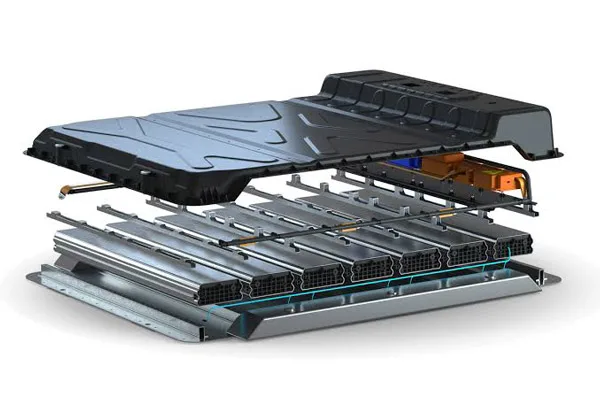
An EV battery enclosure is the protective structure that houses and supports the battery cells, modules, or pack. It may also accommodate busbars, sensors, wiring, cooling components, and electrical connections.
At the pack level, the enclosure helps protect the battery from road debris, water, dust, vibration, and impact. Within the pack, smaller enclosures and insulating parts help organize components and prevent unwanted electrical contact.
A battery enclosure is therefore more than a container. It is part of a larger safety and thermal-management system, and each component must be designed to work with the specific battery chemistry and vehicle architecture.
How injection molding is used
In injection molding, plastic pellets are heated until molten and injected into a shaped mold. After cooling, the part is removed and prepared for assembly or further processing. The process can produce detailed geometries and consistent parts, making it useful for EV battery components manufactured in medium or high volumes.
Common applications include:
- Cell holders and spacers: Keep cells aligned and maintain planned gaps.
- Module covers and end plates: Enclose or support battery modules.
- Electrical barriers: Separate cells, busbars, and other conductive components.
- Connector and sensor housings: Protect electrical interfaces and monitoring devices.
- Cable guides and clips: Route wiring and help secure it within the pack.
- Cooling-system components: Form ducts, manifolds, or related parts where the material is suitable for the operating conditions.
- Pack covers and selected tray features: Provide nonmetallic or hybrid components in designs where their mechanical performance is adequate.
Large, load-bearing battery trays often face demanding crash and structural requirements. Depending on the design, they may be made from metal, composite, reinforced plastic, or a combination of materials. Injection molding can also produce smaller molded features integrated into a larger assembly.
Why manufacturers use molded plastics
Weight-saving opportunities
Reducing vehicle mass can help improve efficiency and driving range. Plastics are generally lighter than many metals, although the actual weight benefit depends on the material, reinforcement, component design, and required strength.
Molding also allows engineers to place material where it is needed—for example, through ribs, supports, and local reinforcements—rather than using a uniform thickness throughout the part.
Design flexibility
Injection molding can create complex shapes with features such as ribs, bosses, clips, channels, and locating points. These features can combine functions that might otherwise require separate components.
A molded part may, for example, include cell-location features and cable-retention clips in one component. Reducing part count can simplify assembly, but only when the integrated design remains practical to mold, inspect, and service.
Electrical insulation
Many plastics are electrically insulating, which makes them useful for barriers and housings near high-voltage components. Insulation performance depends on the material, wall thickness, geometry, environmental exposure, and condition of the finished part. It must be confirmed through testing rather than assumed from the material name alone.
Corrosion resistance
Unlike some metals, many plastics do not rust. This can be useful in parts exposed to moisture or road environments. However, the selected polymer must still be evaluated for chemicals, coolant, cleaning agents, humidity, and long-term aging.
Repeatability in high-volume production
Once a mold and process are developed, injection molding can produce large quantities of consistent parts. This can make it suitable for vehicle programs with high production volumes. The trade-off is the initial investment in tooling, which may be substantial, particularly for large or complex components.
Material selection
Material choice is one of the most important decisions in battery-enclosure design. A polymer that performs well in one component may be unsuitable for another.
Common material families considered for battery-related parts include:
Polypropylene (PP): Often used for less demanding components where chemical resistance and cost are important.
Polyamide (PA): Available in reinforced grades for parts requiring greater stiffness and strength; moisture absorption and dimensional behavior must be considered.
Polybutylene terephthalate (PBT): Used in some electrical and structural applications, including selected reinforced grades.
Polycarbonate (PC) and blends: Considered where impact performance and dimensional requirements are relevant.
Polyphenylene sulfide (PPS): A high-performance option for certain applications involving elevated temperatures or chemical exposure.
Flame-retardant or glass-fiber-reinforced grades: Used when specific fire, stiffness, or strength properties are required.
 Common manufacturing challenges
Molded battery components can present challenges such as warpage in large or thin parts, inconsistent dimensions, trapped air, weld lines, and difficulty achieving reliable sealing. These risks can often be reduced through early design reviews, mold-flow analysis, prototype evaluation, and appropriate process controls.
Material drying and handling can also be important for some engineering plastics. Moisture or inconsistent processing conditions may affect part quality and performance, so material-specific manufacturing requirements should be followed.
Quality control and production readiness
Before full-scale production, manufacturers typically establish acceptable process parameters and inspection criteria. Quality checks may include verifying critical dimensions, appearance, insert placement, material traceability, and functional features.
A clear production plan helps ensure that prototype learnings carry through to production tooling and repeat manufacturing. Requirements should be agreed upon among the customer, mold maker, material supplier, and component manufacturer.
How Danke Mold Supports EV Battery Component Manufacturing
Danke Mold provides tooling and injection-molding support for EV battery components, from initial design review through prototype development and production tooling. A battery enclosure plastic molding prototype can help assess the part’s fit, assembly, and design before production tooling is finalized.
Each project should account for the component’s material, geometry, manufacturing requirements, and intended operating conditions. Final parts should be validated against the battery pack’s specific performance and safety requirements.