
Pet owners worldwide seek durable, safe, and eco-friendly bowls for feeding and hydrating their beloved animals. The manufacturing of pet food and water bowls has evolved significantly over the years, with plastic injection molding emerging as one of the most efficient and cost-effective solutions. This article explores the best plastic injection molding techniques, materials, and best practices for producing high-quality pet bowls, ensuring safety, durability, and sustainability.
Why Choose Plastic Injection Molding for Pet Bowls?
Plastic injection molding offers numerous advantages that make it ideal for manufacturing pet bowls:
- High Precision and Consistency: Ensures uniformity in size, shape, and quality across large production runs.
- Cost Efficiency: Suitable for mass production, reducing per-unit costs.
- Design Flexibility: Enables complex designs, textures, and features like non-slip bases, ergonomic shapes, and branding.
- Material Versatility: Allows the use of various plastics tailored for safety, strength, and environmental impact.
- Fast Production Cycles: Short cycle times facilitate quick turnaround from design to finished product.
Ideal Materials for Injection-Molded Pet Bowls
Food-Grade Polypropylene (PP): The Industry Standard
Polypropylene is the most widely used material for pet feeding bowls, and for good reason. This thermoplastic offers an exceptional combination of properties that make it ideal for food-contact applications:
Food-Grade Safety: PP is chemically inert and does not leach harmful substances into food or water. It complies with FDA regulations for food contact applications.
High-Temperature Resistance: PP can withstand dishwasher temperatures and boiling water without warping or degrading, making it easy to sanitize.
Durability: The material is lightweight yet impact-resistant and wear-resistant, ensuring long-term use even with active pets.
Chemical Resistance: PP resists attack from food acids, oils, and cleaning agents.
Ease of Processing: PP flows well in injection molding, allowing for complex geometries and thin-wall designs.
High-Density Polyethylene (HDPE): For Demanding Environments
HDPE is another excellent choice for pet bowls, particularly those intended for outdoor use or heavy-duty applications.
Superior Impact Strength: HDPE offers exceptional toughness and resistance to cracking, even in cold temperatures.
Moisture Resistance: The material is virtually impervious to moisture, making it ideal for water bowls and outdoor applications.
Temperature Stability: HDPE maintains its properties across a wide temperature range, from freezing to moderate heat.
Acrylonitrile Butadiene Styrene (ABS): For Value and Versatility
ABS offers a balanced combination of properties at a competitive price point.
Good Mechanical Properties: ABS provides adequate strength and impact resistance for most pet bowl applications.
Excellent Surface Finish: The material accepts a wide range of colors and surface textures.
Cost-Effective: ABS is generally less expensive than engineering plastics like PC.
Thermoplastic Elastomers (TPE/TPU): For Specialized Features
TPE and TPU materials are increasingly used in pet bowl manufacturing for specialized applications.
Soft-Touch Surfaces: These materials offer rubber-like elasticity and softness that protect pets’ gums and mouths.
Non-Slip Properties: TPE is commonly used for the bottom layer in two-material bowls to provide excellent grip on smooth floors.
Flexibility: Foldable or collapsible pet bowls can be made from TPE, offering portability for travel.
Safety: TPE materials are BPA-free, phthalate-free, and comply with FDA standards
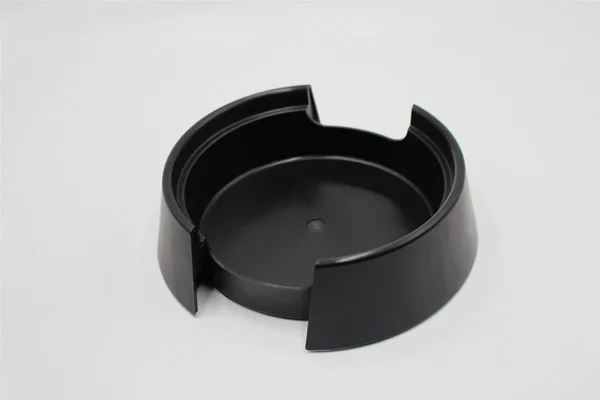
Pet bowl
Advanced Manufacturing Techniques
Single-Material Injection Molding
The simplest and most common approach involves molding the entire bowl from a single material, typically PP or HDPE. This method offers simplicity, cost‑effectiveness, and consistent quality. Single‑material bowls can integrate various functional features directly into the design:
- Non‑Slip Bases – Ribbed patterns, suction cups, or integrally molded rubber pads prevent sliding.
- Tilted Designs – Angled bowls help pets eat more comfortably and reduce cervical and joint stress.
- Splash‑Proof Rims – Built‑in raised edges minimize food and water spills.
Two-Shot and Overmolding
This advanced technique produces a single part with two distinct materials or colors in one automated cycle. For pet bowls, it typically combines a rigid PP body with a soft, non‑slip TPE base.
How It Works: Two separate injection units are used. In the first shot, the rigid substrate is molded. The mold then rotates or transfers to a second station, where the TPE is injected directly onto specific areas of the first part. This chemical/thermal bonding creates a permanent, inseparable joint.
Key Advantages:
- Superior Grip – The TPE base provides excellent friction on tile, wood, or concrete, preventing sliding during vigorous eating.
- Enhanced Durability – The soft overmold absorbs impact, reducing chipping or cracking.
- Reduced Assembly – Eliminates secondary operations, lowering labor costs and potential failure points.
- Aesthetic Appeal – Two‑tone designs and contrasting textures add significant visual appeal and branding opportunities.
Mold Engineering and Advanced Manufacturing Technologies
The quality and lifespan of the injection mold are paramount to both part quality and production economics. For high‑volume pet bowl manufacturing, molds are typically constructed from specialized tool steels:
- P20 – Pre‑hardened steel suitable for moderate production volumes.
- 718H – Offers high polishability and corrosion resistance for premium surface finishes.
- S136 – Stainless steel grade providing superior corrosion resistance for food‑contact applications.
- H13 – Hot‑work tool steel for high‑temperature applications and extended mold life.
A well‑maintained mold can deliver over 1,000,000 cycles before requiring significant refurbishment.
Design Considerations for Pet Bowls
Design plays a vital role in the functionality and safety of injection-molded pet bowls:
Ergonomic Shape: Ensures comfortable feeding and drinking experience for pets.
Non-Slip Base: Incorporate textured or rubberized bottoms to prevent sliding.
Smooth Edges and Surfaces: Avoid sharp edges for safety and ease of cleaning.
Branding and Aesthetics: Incorporate logos, patterns, or colors for branding and appeal.
Size and Capacity: Customize dimensions based on pet size and breed.
Manufacturing Process and Best Practices
Producing high-quality pet bowls via injection molding involves careful planning and execution:
Material Drying: Proper drying of plastics like polypropylene and HDPE to prevent bubbles, warping, or surface defects.
Mold Design: Employ precise mold fabrication with appropriate venting, gating, and cooling channels to ensure uniform filling and minimize defects.
Process Parameters: Optimize temperature, injection pressure, and cooling time for each material to ensure dimensional accuracy and surface finish.
Cycle Optimization: Balance cycle time with quality to maximize productivity without compromising product integrity.
Quality Control: Conduct regular inspections and testing for defects like sink marks, warping, or incomplete filling.
Post-Processing and Finishing
Post-processing enhances the final product:
- Trimming and Deburring: Remove excess flash and sharp edges.
- Surface Treatments: Add textures or coatings to improve grip or aesthetic appeal.
- Labeling and Branding: Apply logos or decorative elements through laser engraving or pad printing.
Challenges and Solutions in Injection Molding for Pet Bowls
While injection molding is highly effective, it does present certain challenges:
Material Warping and Shrinkage: Proper mold design, cooling channels, and process control mitigate these issues.
Moisture Sensitivity: Plastics like polypropylene require thorough drying to prevent surface defects.
Cycle Time Management: Use of advanced cooling systems and optimized gating reduces cycle times.
Environmental Impact: Emphasize recycling and eco-friendly materials to address sustainability concerns.
Quality Consistency: Implement strict quality control protocols to ensure uniformity.
Future Trends in Pet Bowl Manufacturing
Smart Connected Bowls
Integration of weight sensors, RFID tags, or Bluetooth connectivity allows pet owners to track feeding amounts, water consumption, and even detect early signs of health issues. Injection molding is adapting to incorporate sensor housings and battery compartments directly into the bowl design.
3D Printing for Customization
While not for mass production, 3D printing is enabling rapid prototyping and the creation of custom molds for short‑run, personalized pet bowls. This allows smaller brands to test new designs quickly and cost‑effectively.
Industry 4.0 and Digital Manufacturing
The adoption of automated guided vehicles (AGVs) and smart factories is streamlining production. Digital twin technology allows manufacturers to simulate the entire injection molding process, optimizing parameters virtually before physical production begins, reducing trial‑and‑error and material waste.
Sustainable Manufacturing
Closed‑loop recycling systems, in‑house regrind usage, and carbon‑neutral production initiatives are becoming competitive differentiators. Brands that transparently communicate their sustainability efforts are gaining consumer trust.
Conclusion
Plastic injection molding remains the best solution for producing high-quality pet food and water bowls. Its combination of precision, flexibility, and cost-effectiveness enables manufacturers to meet consumer demands for safe, durable, and eco-friendly pet products. By choosing the right materials, optimizing design, and adhering to best manufacturing practices, companies can produce pet bowls that are not only functional and safe for pets but also environmentally responsible.