
In the world of manufacturing, producing high-quality, intricate, and precise parts is essential across various industries such as healthcare, aerospace, automotive, electronics, and consumer goods. One of the most advanced techniques that meet these demanding standards is precision injection molding. This process offers exceptional accuracy, repeatability, and efficiency, making it a preferred choice for manufacturers aiming for superior product quality.
In this comprehensive guide, we will explore what precision injection molding is, how it differs from traditional injection molding, its benefits, the process involved, common applications, and key considerations for selecting the right solution for your manufacturing needs.
What Is Precision Injection Molding?
Precision injection molding is an advanced manufacturing process that involves injecting molten material—typically plastics—into a highly detailed and tightly controlled mold to produce parts with extremely precise dimensions and fine surface finishes. Unlike conventional injection molding, which may tolerate some variability, precision molding emphasizes meticulous control over variables such as temperature, pressure, and mold design to achieve superior accuracy and consistency.
This technique is especially valuable when manufacturing components with complex geometries, micro-features, or tight tolerances, often within the range of micrometers.
The Precision Injection Molding Process
The process involves several key steps:
1. Design and Mold Fabrication: High-precision CAD modeling followed by CNC machining of molds with tight tolerances.
2. Material Selection: Choosing appropriate thermoplastics or other polymers with properties suited for precision features.
3. Machine Setup: Configuring injection molding machines equipped with advanced control systems to monitor and adjust process parameters.
4. Injection: Molten material is injected into the mold cavity under carefully controlled pressure and temperature.
5. Cooling: Controlled cooling allows parts to solidify uniformly without warping or defects.
6. Ejection and Inspection: Parts are carefully ejected and inspected for dimensional accuracy, surface quality, and functional features.
7. Post-Processing: Additional finishing processes may be applied if necessary, though minimal post-processing is typically required.
How Does Precision Injection Molding Differ from Traditional Injection Molding?
While both processes share fundamental principles, key differences set precision injection molding apart:
Tolerance Levels: Precision molding achieves tighter tolerances, often within ±0.005 inches, whereas traditional molding may have looser tolerances.
Mold Design: Precision molds are crafted with high-precision CNC machining, often using advanced materials and fine surface finishes to ensure dimensional stability.
Process Control: Precision molding employs sophisticated control systems for temperature, pressure, and injection speed to maintain consistent quality.
Part Complexity: It can produce micro-features, thin walls, and intricate details that are challenging or impossible with standard molding.
Applications: Precision molding is suited for high-performance, high-accuracy parts, whereas traditional molding may be used for bulk or less-critical components.
Common Materials Used in Precision Injection Molding
While thermoplastics remain the most widely used materials, precision injection molding supports a diverse array of polymers. Common choices include:
Polycarbonate (PC): Valued for its optical clarity, high impact resistance, and dimensional stability.
Liquid Silicone Rubber (LSR): Ideal for medical and automotive applications requiring flexibility, biocompatibility, and thermal resistance.
Polyether Ether Ketone (PEEK): A high-performance engineering plastic with excellent mechanical strength and chemical resistance, often used in aerospace and medical implants.
Acrylonitrile Butadiene Styrene (ABS): Known for its toughness and ease of processing, commonly used in consumer electronics.
Polyamide (Nylon): Offers good wear resistance and mechanical properties, suitable for gears and automotive components.
Polyphenylsulfone (PPSU): A high-temperature thermoplastic with excellent hydrolysis resistance, frequently specified for medical sterilization applications.
The selection of material directly influences molding parameters, tooling design, and final part performance, making it a crucial decision in the precision molding workflow.
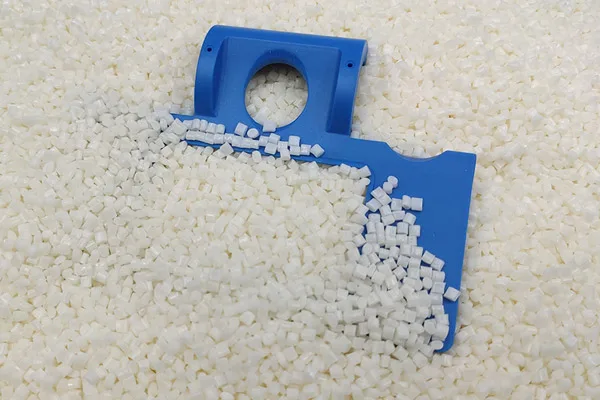
Injection molding material
Benefits of Precision Injection Molding
Opting for precision injection molding offers numerous advantages:
- High Accuracy and Consistency: Ensures parts meet strict tolerances, reducing the need for secondary finishing or rework.
- Superior Surface Finish: Produces smooth, high-quality surfaces that enhance aesthetic appeal and reduce post-processing.
- Complex Geometries: Capable of molding microfeatures, thin walls, and intricate designs with high fidelity.
- Repeatability: Maintains consistent quality across large production runs, ideal for mass manufacturing.
- Material Efficiency: Optimizes material use and minimizes waste due to precise process control.
- Reduced Lead Times: Faster production cycles with high precision reduce overall project timelines.
Design Considerations for Precision Injection Molding
To maximize the benefits of precision injection molding, careful attention must be paid to part and mold design. Several critical factors influence manufacturability and quality:
Wall Thickness Uniformity
Maintaining consistent wall thickness throughout the part minimizes differential shrinkage, residual stresses, and warpage. For precision applications, thickness variations should be minimized wherever possible. Gradual transitions between thick and thin sections help prevent sink marks and voids.
Draft Angles and Ejection
Even with highly polished molds, adequate draft angles—typically 0.5° to 2°—are essential for smooth part ejection without surface damage. For precision parts with micro-features, specialized ejection systems such as air-assisted or stripper plate designs may be employed.
Gate Location and Design
The gate location affects fill patterns, weld line formation, and final part stress distribution. Precision molding often utilizes multiple gates or hot runner systems with sequential valve gating to control melt flow precisely and minimize cosmetic defects.
Ribs, Bosses, and Fastening Features
Reinforcing features must be designed with appropriate geometry to prevent sink marks while maintaining structural integrity. Guidelines such as rib thickness not exceeding 60% of nominal wall thickness help preserve surface quality.
Tolerancing Strategy
Part tolerances should be specified realistically based on material behavior, part geometry, and production requirements. Dimensional tolerance analysis using statistical methods helps predict and control variability across production runs.
Common Applications of Precision Injection Molding
Due to its high accuracy and ability to produce complex components, precision injection molding is used in various industries:
- Medical Devices: Microfluidic devices, surgical instruments, and implant components.
- Electronics: Connectors, housings, micro-electromechanical systems (MEMS).
- Aerospace: Lightweight, high-strength components with tight tolerances.
- Automotive: Sensors, connectors, and other critical parts.
- Consumer Goods: High-end accessories, precision tools, and electronic enclosures.
Key Considerations When Choosing Precision Injection Molding
Design for Manufacturability: Collaborate with experienced mold designers to optimize part and mold design.
Material Compatibility: Select materials that can withstand process conditions and meet part requirements.
Mold Maintenance: Regular maintenance to preserve mold precision and surface quality.
Cost Implications: Precision molds and processes may involve higher initial investment but offer long-term savings through quality and repeatability.
Partner Expertise: Work with experienced manufacturers specializing in precision injection molding to achieve desired results.
Conclusion
Precision injection molding stands at the forefront of manufacturing technology, enabling the production of complex, high-precision components that meet the stringent demands of modern industries. By understanding its principles, advantages, and application areas, manufacturers can leverage this process to enhance product quality, reduce waste, and accelerate time-to-market.
Whether you’re developing medical devices, aerospace components, or high-tech consumer products, precision injection molding offers a reliable pathway to achieving excellence in manufacturing. Investing in the right tools, materials, and expertise can unlock new possibilities for innovation and growth in your business.