
Micro injection molding (MIM) is an advanced manufacturing technology that has revolutionized the production of miniature components across various industries. This process enables the precise fabrication of small, complex, and high-precision parts with excellent surface finish and tight tolerances. As technology progresses and the demand for miniaturized components increases, understanding the principles, benefits, and applications of micro injection molding becomes essential for manufacturers and engineers alike.
Fundamentals of Micro Injection Molding
Micro injection molding is a specialized variation of traditional injection molding that focuses on producing tiny parts, typically measuring less than 1 gram in weight and with dimensions often in the millimeter or even micron scale. The process involves melting plastic resin pellets and injecting the molten material into a highly precise and miniature mold cavity under high pressure. Once cooled and solidified, the mold opens, and the tiny part is ejected.
Key aspects of micro injection molding include:
- Precision Mold Design: The molds used are intricately designed with micro-scale features, often requiring advanced manufacturing techniques such as micro EDM or micro-EDM wire cutting.
- Material Selection: Thermoplastics are commonly used, with materials chosen based on properties like flowability, strength, and biocompatibility.
- Process Control: Maintaining strict control over parameters such as injection pressure, temperature, and cooling rate is crucial to ensure feature accuracy and surface quality.
- High-Performance Machinery: Micro injection molding machines are equipped with specialized screws, nozzles, and clamping units capable of handling small shot sizes and precise injection control.
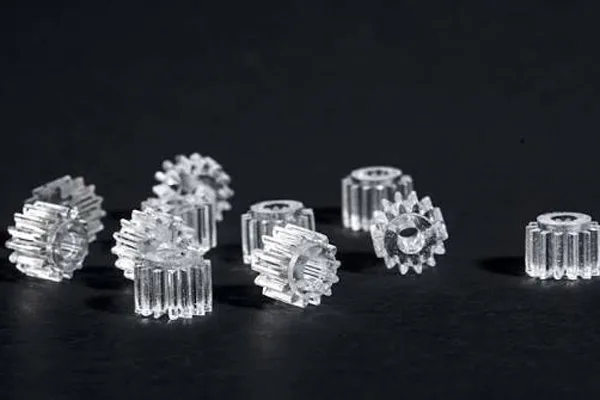
Micro plastic parts
Benefits of Micro Injection Molding
The advantages of micro injection molding make it an attractive choice for producing miniature components:
High Precision and Accuracy: The process achieves tight tolerances, ensuring consistent quality for complex micro-features.
Excellent Surface Finish: Components produced have smooth surfaces, reducing the need for secondary finishing processes.
Efficiency and Repeatability: Once the mold is developed, production runs can be highly automated, providing consistent parts with minimal variability.
Material Efficiency: The process uses very small amounts of raw material, reducing waste and costs.
Ability to Produce Complex Geometries: Micro injection molding can create intricate designs, including undercuts and micro-details, which are challenging with other manufacturing methods.
Rapid Prototyping and Production: Suitable for both low-volume prototyping and high-volume manufacturing, enabling quick transitions from design to production.
Key Distinctions Between Micro Molding and Traditional Injection Molding
While both micro injection molding and conventional injection molding share basic principles, they differ significantly in several aspects:
|
Aspect |
Micro Injection Molding |
Conventional Injection Molding |
| Part Size | Produces very small parts, often less than 1 gram | Produces larger parts, typically grams to kilograms |
| Feature Complexity | Capable of micro-scale features and intricate details | Suitable for larger, less detailed parts |
| Mold Design & Manufacturing | Requires highly precise, micro-scale molds | Molds are larger and less complex in micro features |
| Equipment | Specialized micro molding machines with fine control | Standard injection molding machines |
| Processing Parameters | Extremely tight control over temperature, pressure, and cooling | Broader parameter ranges, less stringent control |
| Material Handling | Handles small shot sizes, micro-sized resins | Handles larger shot sizes and standard resins |
| Cost & Production Volume | Higher tooling costs, ideal for high-precision, low-to-medium volume | Lower tooling costs, suitable for high-volume production |
| Applications | Microelectronics, medical devices, microfluidics | Automotive, consumer goods, larger industrial parts |
Applications of Micro Injection Molding
Micro injection molding finds applications across a broad spectrum of industries, including:
- Medical Devices: Manufacturing of micro-needles, implantable devices, microfluidic chips, and surgical tools that require high precision and biocompatibility.
- Electronics: Production of tiny connectors, housings, and components for smartphones, wearables, and other electronic gadgets.
- Automotive Industry: Fabrication of miniature sensors, micro-actuators, and other components that contribute to vehicle automation and safety systems.
- Consumer Products: Creating small household items, decorative components, and accessories with fine details.
- Aerospace: Producing miniature parts for sensors and instrumentation where weight reduction and precision are critical.
Challenges and Future Trends
Despite its numerous benefits, micro injection molding presents challenges such as mold manufacturing complexity, high initial tooling costs, and the need for precise process control. Additionally, handling and feeding micro-sized materials require specialized equipment.
Looking ahead, advancements in materials science, mold manufacturing techniques, and automation are expected to further enhance the capabilities of micro injection molding. Innovations like multi-material micro molding, 3D micro-structuring, and integration with smart manufacturing systems will expand its application scope, making it an even more vital technology in miniature component production.
Conclusion
Micro injection molding is a sophisticated manufacturing process that combines precision engineering, advanced materials, and innovative technology to produce tiny, complex components with high quality and repeatability. Its numerous benefits—ranging from high accuracy to material efficiency—make it indispensable across various high-tech industries. As the demand for miniature and micro-scale devices continues to grow, micro injection molding is poised to play an increasingly significant role in shaping the future of manufacturing.