
SLA (Stereolithography Apparatus) 3D printing has revolutionized the world of additive manufacturing by enabling the creation of highly detailed, smooth, and precise models. As one of the earliest 3D printing technologies, SLA continues to be a preferred choice for professionals, hobbyists, and industries requiring high-resolution prototypes and end-use parts. This comprehensive guide will explore everything you need to know about SLA 3D printing — from the technology and materials to applications, benefits, and tips for successful printing.
What is SLA 3D Printing?
SLA 3D printing is an additive manufacturing process that uses a laser or projector to cure liquid photopolymer resin layer by layer. The process begins with a vat of resin, which is selectively cured by a UV laser or digital light projector according to the digital model. The build platform then moves to allow successive layers to be cured, building the object from the bottom up. Once completed, the object requires post-processing steps, including cleaning and further curing.
Key Features of SLA:
- Exceptional resolution and surface quality
- Fine details and intricate geometries
- Smooth surface finish with minimal post-processing
How SLA Works: The Process Step-by-Step
1. Design Preparation
- Create or import a 3D model using CAD software.
- Use slicing software to divide the model into thin layers and generate support structures if needed.
2. Resin Vat and Printer Setup
- Fill the resin vat with your chosen photopolymer resin.
- Calibrate the build platform and ensure the printer is ready.
3. Printing
- The laser or projector cures the resin layer by layer, following the sliced model.
- The build platform gradually lowers into the resin vat, allowing new layers to be cured.
4. Post-Processing
- Carefully remove the printed object from the build platform.
- Wash the print in isopropyl alcohol (IPA) or a cleaning solution to remove uncured resin.
- Post-cure under UV light to strengthen and fully cure the material.
The Science Behind SLA: Light Sources and Curing
While the fundamental process remains the same, SLA printers use different light engines. Laser-based SLA employs a galvanometer-driven UV laser that traces each layer’s outline, offering excellent precision and smooth surfaces. DLP (Digital Light Processing) uses a digital micromirror device to flash an entire layer at once, which speeds up printing for small parts but may sacrifice some edge definition. LCD (or MSLA) printers use a masked UV-LCD screen to cure whole layers, providing a cost-effective alternative for hobbyists. Regardless of the source, the photopolymerisation reaction is exothermic and requires careful control of exposure time and intensity to avoid over-curing or under-curing, which can lead to dimensional errors or failed prints.
Materials Used in SLA 3D Printing
SLA utilizes liquid photopolymer resins that harden when exposed to UV light. The variety of resins available allows for different applications and properties.
Common Types of SLA Resins:
Standard Resins: Ideal for prototypes and display models; offer high detail but limited mechanical strength.
Tough Resins: Mimic the durability of ABS or nylon; suitable for functional prototypes.
Flexible Resins: Provide elastic properties for parts requiring bendability.
High-Temperature Resins: Designed for parts exposed to heat and stress.
Castable Resins: Used in jewelry and dental applications for investment casting.
Biocompatible Resins: Approved for medical or dental use, such as surgical guides.
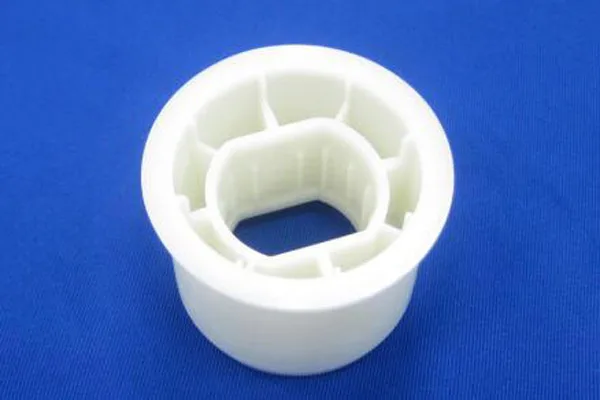
SLA part
Selecting the Right Resin for Your Application
Choosing a resin goes beyond just picking a category. Key material properties to evaluate include tensile strength, elongation at break, heat deflection temperature, and impact resistance. For example, a standard resin may have a tensile strength of 40–50 MPa but low elongation (<5%), making it brittle, whereas a tough resin might offer 60 MPa tensile strength with 20% elongation, making it suitable for snap-fit assemblies. Always check the manufacturer’s technical data sheet and consider environmental factors such as UV degradation or moisture absorption when selecting a resin for end-use parts.
Benefits of SLA 3D Printing
Exceptional Detail and Resolution: Layer heights can be as low as 25 microns, producing highly detailed parts.
Smooth Surface Finish: Reduces or eliminates the need for post-sanding or finishing.
Complex Geometries: Capable of producing intricate, delicate structures impossible with traditional manufacturing.
Rapid Prototyping: Accelerates product development cycles with fast turnaround times.
Challenges and Limitations
- Material Cost: SLA resins are generally more expensive than filament-based thermoplastics used in FDM/FFF.
- Post-Processing Requirements: Cleaning and UV curing add steps and time, which can be a bottleneck in production.
- Resin Handling and Safety: Resins are chemicals that require proper safety precautions, including gloves and ventilation.
- Limited Build Volume: Most SLA printers have smaller build envelopes compared to FDM/FFF printers, which can limit large-scale manufacturing.
- Sensitivity to Environmental Conditions: Dust, ambient light, and temperature fluctuations can affect print quality.
Tips for Successful SLA 3D Printing
Proper Calibration: Regularly calibrate the build platform and check the resin level.
Support Placement: Use supports strategically for delicate or overhanging features.
Optimal Settings: Adjust layer height, exposure time, and curing parameters based on resin and model complexity.
Resin Storage: Store resin in a cool, dark place to extend shelf life.
Post-Processing: Use high-quality cleaning agents and follow recommended curing procedures for the best results.
Future Trends in SLA 3D Printing
- Material Innovation: Development of new resins with enhanced mechanical, thermal, and biocompatible properties.
- Larger Build Volumes: Emerging printers with increased size capabilities for industrial applications.
- Multi-Material Printing: Combining different resins in a single build for multi-functional parts.
- Automation: Streamlined post-processing and resin handling for improved efficiency.
- Sustainability: Eco-friendly resins and recycling methods to reduce environmental impact.
Conclusion
SLA 3D printing offers unmatched precision and surface quality, making it a powerful tool for prototyping, manufacturing, and artistic projects. Its ability to produce intricate details and smooth finishes opens up possibilities across diverse industries—from healthcare to jewelry design. While it has some limitations, ongoing innovations continue to expand its capabilities and accessibility.
Whether you’re new to 3D printing or an experienced professional, understanding the nuances of SLA technology enables you to leverage its strengths effectively. Embrace the potential of SLA 3D printing to turn your ideas into reality with high-definition precision and exceptional quality.