
Plastic injection molding is a widely used manufacturing process that allows for the production of complex, high-precision parts at scale. Central to the success of this process is the precise control of temperature throughout various stages of molding. Proper temperature regulation is not just a matter of operational efficiency; it directly impacts the quality, durability, and cost-effectiveness of the final products. This article explores the critical reasons why temperature control is essential in plastic injection molding and how it influences every aspect of the manufacturing process.
1. Ensuring Proper Material Flow
One of the primary reasons temperature regulation is vital in injection molding is to achieve optimal flow of the thermoplastic material. Different plastics have specific melt temperature ranges within which they flow most easily and uniformly. If the temperature is too low, the material may not melt sufficiently, leading to incomplete filling of the mold, short shots, or poor surface finish. Conversely, excessively high temperatures can cause material degradation, burning, or excessive flashing.
Maintaining the correct temperature ensures that the resin reaches a uniform, workable viscosity, allowing it to fill intricate molds completely and evenly. This results in parts with consistent dimensions and surface quality.
2. Preventing Defects and Ensuring Quality
Temperature fluctuations can cause a variety of defects in molded parts, including warping, sink marks, voids, burn marks, and surface blemishes. Proper temperature control minimizes these issues by ensuring the plastic cools and solidifies uniformly within the mold.
For example, uneven cooling caused by inconsistent mold temperatures can lead to warping or warpage of the final product. Similarly, if the melt temperature is not properly maintained, it can cause surface defects or internal stresses that compromise the part’s strength and appearance.
3. Optimizing Cycle Times and Productivity
Efficient temperature regulation significantly affects cycle times—the duration required to produce each batch of parts. Precise control of mold and barrel temperatures allows for faster heating and cooling cycles, reducing overall production time without sacrificing quality.
When temperatures are kept within optimal ranges, the cooling phase becomes more predictable and consistent, leading to fewer rejects and rework. This increases throughput and lowers manufacturing costs, making the process more economical and competitive.
4. Extending Tool Life and Reducing Maintenance
High or inconsistent temperatures can accelerate wear and tear on molds and equipment. Excessive heat can cause thermal expansion, leading to misalignments or damage to mold surfaces. Conversely, inadequate temperature control may result in cold spots that cause uneven material flow, increasing the risk of mold sticking, surface defects, or damage.
By maintaining stable temperatures, manufacturers can extend the lifespan of molds and reduce maintenance costs, ensuring smooth, long-term operation.
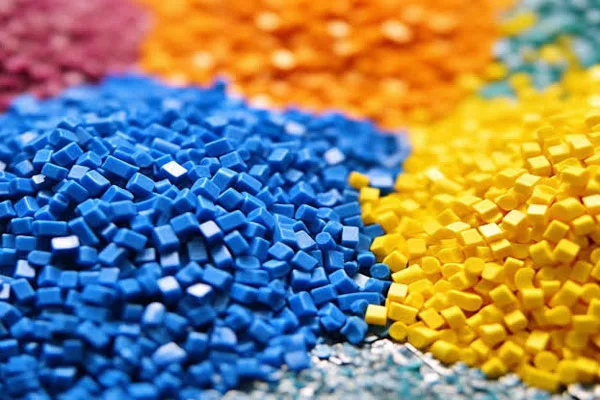
Plastic materials
5. Preventing Material Degradation
Different plastics have specific thermal stability limits. Exceeding these limits through poor temperature regulation can lead to polymer degradation, which affects mechanical properties, color, and overall material performance. Overheating can also produce fumes and emissions that pose health and safety risks.
Proper temperature control ensures the material remains within safe processing limits, preserving its properties and reducing environmental and health hazards.
6. Achieving Consistency and Repeatability
In high-volume manufacturing, consistency is key. Precise temperature regulation ensures that each part produced meets the same specifications, reducing variability and ensuring customer satisfaction. Automated temperature control systems with sensors and feedback mechanisms help maintain stable conditions, allowing for repeatable production runs.
7. Key Temperature Zones in Injection Molding
- Feed Throat and Barrel Zones: The feed throat should stay cool enough to prevent resin bridging or premature melting, but warm enough to avoid condensation and support consistent feeding. The barrel is divided into multiple heating zones—rear, middle, and front—that gradually melt the polymer. Barrel settings must also account for shear heat from the screw, screw speed, back pressure, and injection speed.
- Nozzle, Hot Runner, and Manifold: The nozzle transfers molten plastic from the barrel into the mold. If it is too cold, material may freeze off or restrict flow; if too hot, drooling, stringing, or degradation can occur. In hot runner systems, each manifold and nozzle drop must be individually balanced to prevent color shifts, flow imbalances, gate freeze-off, or degradation in stagnant areas.
- Mold and Tooling: Mold temperature strongly influences cooling rate, surface finish, dimensional stability, shrinkage, and crystallinity. A mold that is too cold can cause short shots, flow lines, and high residual stress. A mold that is too hot can extend cycle time, cause flashing, and increase warpage.
- Coolant and Chiller Loop: Mold cooling is controlled by coolant temperature, flow rate, and circuit design. Coolant must flow turbulently for efficient heat transfer. Laminar flow reduces cooling efficiency and creates uneven mold surface temperatures.
FAQs-
Why is mold temperature as important as melt temperature?
Melt temperature controls flow and degradation, while mold temperature controls cooling, shrinkage, crystallinity, surface finish, and cycle time. Both must be balanced.
Can higher temperature always improve flow?
Higher temperature can reduce viscosity and improve flow, but excessive heat can degrade the polymer, cause flashing, increase cycle time, and create fumes.
How often should temperature sensors be calibrated?
Calibration frequency depends on the application and quality system, but many manufacturers calibrate critical sensors annually or semiannually. High-precision or regulated industries may require more frequent checks.
What is the ideal coolant temperature?
There is no single ideal. It depends on the polymer, mold design, wall thickness, cycle time, and quality requirements. The resin supplier’s recommendations and process validation should guide the setting.
How can I tell if temperature is causing a defect?
Use a systematic troubleshooting approach. Check whether the defect changes when temperature is adjusted while other variables remain constant. Process monitoring, cavity pressure data, and mold surface temperature measurements can help isolate the cause.
Conclusion
Temperature regulation is a fundamental aspect of plastic injection molding that directly influences the quality, efficiency, and longevity of both the parts produced and the equipment used. Precise control of melt, mold, and barrel temperatures ensures smooth material flow, minimizes defects, optimizes cycle times, and prolongs equipment life. As technology advances, integrated temperature control systems are becoming more sophisticated, offering even greater precision and reliability. For manufacturers aiming to produce high-quality, cost-effective plastic components, investing in robust temperature regulation practices is essential for success in today’s competitive market.