
Metal Injection Molding (MIM) is a transformative manufacturing process that combines the versatility of plastic injection molding with the strength and durability of metals. It allows for the production of complex, high-precision metal components in large volumes, making it an ideal choice for a wide range of industries. However, like any manufacturing method, MIM is most effective when applied to specific types of parts and production scenarios. In this article, we will explore when to use metal injection molding, its advantages, limitations, and key considerations to help you determine if it’s the right process for your project.
What Is Metal Injection Molding?
Metal Injection Molding is a manufacturing process that involves mixing fine metal powders with a binder material to create a feedstock that can be injected into molds, similar to plastic injection molding. After molding, the part undergoes a series of thermal and chemical processes—debinding and sintering—to remove the binder and fuse the metal particles into a solid, dense, and precise metal component. This process enables the production of complex geometries with high dimensional accuracy and excellent surface finishes.
When to Use Metal Injection Molding
High-Volume Production of Complex Parts
One of the primary advantages of MIM is its suitability for large-scale manufacturing. When you need to produce thousands or even millions of identical parts with intricate geometries, MIM provides a cost-effective, efficient solution. The high mold life and rapid cycle times make it ideal for high-volume runs, especially when parts require complex features that would be difficult or expensive to produce through machining or casting.
Parts with Complex Geometries and Fine Details
MIM excels at creating components with complex shapes, internal channels, undercuts, and other intricate features. Traditional manufacturing methods like machining, casting, or forging may struggle with such geometries, either due to limitations in tooling or higher costs. MIM’s ability to produce detailed parts with tight tolerances makes it suitable for applications requiring precision and complexity, such as medical implants, aerospace components, and intricate hardware.
Small to Medium-Sized Components
Compared to forging or casting, which are often better suited for larger parts, MIM is particularly advantageous for small to medium-sized components. Its ability to produce miniature parts with high dimensional accuracy and consistent quality makes it popular for miniaturized electronic connectors, dental devices, and precision automotive components.
Cost-Effective for Medium to High-Volume Runs
While initial tooling costs for MIM can be significant, the per-part cost decreases substantially with volume. For projects where high quantities are required, MIM becomes a cost-effective alternative to machining or other manufacturing methods, especially when considering the savings on post-processing and finishing.
Materials and Mechanical Property Requirements
MIM supports a wide range of metal alloys, including stainless steels, tool steels, titanium, tungsten, and more. When your application demands specific material properties—such as high strength, corrosion resistance, or wear resistance—MIM can provide components that meet these requirements without the need for secondary machining or treatment.
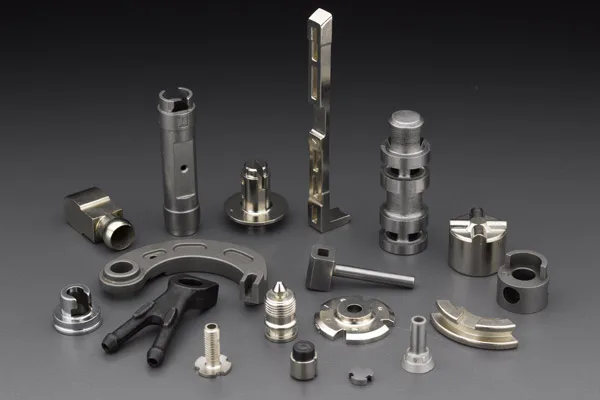
Metal injection parts
Applications Requiring Tight Tolerances and Surface Finish
MIM parts typically have excellent surface finishes and tight tolerances, reducing or eliminating the need for secondary finishing processes. This makes MIM suitable for applications where precision and smooth surfaces are critical, such as in medical devices, electronic connectors, or precision gears.
When Not to Use Metal Injection Molding
While MIM offers many advantages, it’s not suitable for every application. It is less effective for:
- Large or Heavy Parts: The process is optimized for small to medium-sized components. Larger parts may require alternative methods like casting or forging. Parts weighing more than 100 grams become increasingly challenging to produce with MIM due to debinding and sintering limitations, as well as the higher tooling costs associated with larger molds. For heavy components, investment casting, sand casting, or closed-die forging are generally more practical and economical.
- Low-Volume Production: The high initial tooling costs may not be justified for small production runs or prototypes. For quantities under 5,000 to 10,000 parts, alternative methods such as CNC machining, investment casting, or 3D printing are often more cost-effective. These methods have lower setup costs and offer greater flexibility for design iterations, making them better suited for early-stage development or niche applications.
- Parts Requiring High Mechanical Properties Beyond MIM Capabilities: Although MIM provides good mechanical properties, some applications may demand parts with properties achievable only through forging or powder metallurgy with post-heat treatments. For extremely high-strength or fatigue-critical applications—such as turbine blades, connecting rods, or suspension components—forging or wrought processing may be necessary to achieve the required grain structure and mechanical performance. Additionally, MIM parts may have slight porosity, which can affect fatigue life and pressure-tightness in certain applications.
Considerations Before Choosing MIM
- Initial Investment: Tooling costs are significant, so MIM is best suited for high-volume production.
- Design for Manufacturing: Parts should be designed with MIM in mind, considering factors such as draft angles, wall thickness, and features that facilitate mold filling and ejection.
- Material Selection: Not all alloys are available or suitable for MIM; confirm compatibility with your desired material.
- Post-Processing: Some parts may require secondary processes like heat treatment, surface finishing, or machining to meet specific requirements.
Conclusion
Metal Injection Molding is a powerful manufacturing process that excels in producing complex, high-precision metal components at high volumes. It is most appropriate when you need small to medium-sized parts with intricate geometries, tight tolerances, and demanding material properties, especially in industries such as aerospace, medical, automotive, and electronics. By understanding the strengths and limitations of MIM, manufacturers can make informed decisions to optimize their production, reduce costs, and achieve superior product quality. As technology advances and material options expand, MIM’s role in modern manufacturing is set to grow even further, driving innovation across diverse sectors.