
What is Vacuum Casting?
Vacuum Casting, also known as silicone molding, is a process that involves creating a master model of the part, typically through 3D printing or machining. This master is then used to produce a silicone mold, into which liquid resin or other casting materials are poured under vacuum to eliminate air bubbles. Once cured, the silicone mold is removed, and the final parts are demolded.
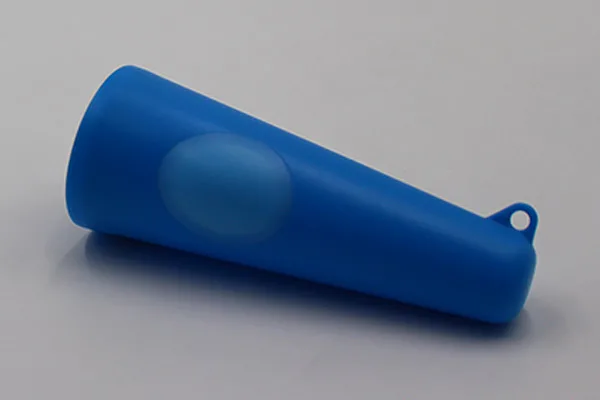
Vacuum casting part
Advantages of Vacuum Casting:
- Rapid Production: Suitable for producing small batches quickly.
- High Fidelity: Capable of replicating fine details and complex geometries.
- Material Flexibility: Allows for a wide range of resins, including flexible, rigid, transparent, and colored materials.
- Cost-Effective for Small Batches: No need for expensive tooling, making it ideal for prototypes or low-volume production.
Limitations of Vacuum Casting
Despite its speed and flexibility, vacuum casting has notable drawbacks. The silicone molds are soft and wear out quickly, making the process unsuitable for dimensional consistency across large batches. Additionally, the polyurethane resins used are thermosets, meaning they cannot be remelted or recycled. These resins are “simulants” rather than exact equivalents; they often have lower heat deflection temperatures and reduced long-term UV and chemical resistance compared to true engineering thermoplastics. The manual, labor-intensive nature of casting also introduces higher variability between batches.
What is Injection Molding?
Injection Molding is a manufacturing process where molten plastic is injected into a metal mold under high pressure. The mold is typically made from steel or aluminum and is designed based on the final part’s specifications. Once the material cools and solidifies, the mold opens, and the part is ejected.
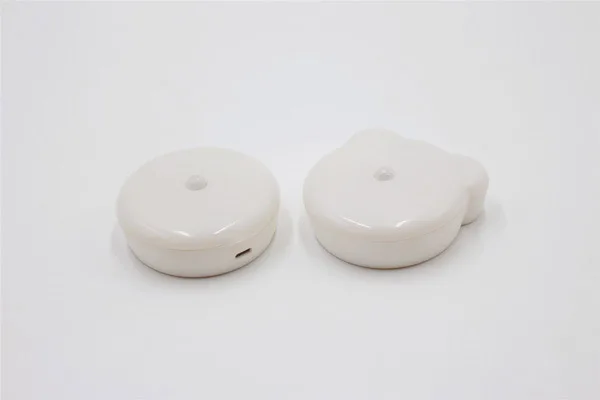
Sense light
Advantages of Injection Molding:
- High Volume Production: Economical for large production runs, often thousands to millions of parts.
- Consistent Quality: Produces uniform parts with tight tolerances.
- Fast Cycle Times: Once the mold is made, parts can be produced rapidly.
- Material Variety: Supports a broad range of thermoplastics and thermosets.
Limitations of Injection Molding
The primary barrier to entry is the significant upfront capital required for the metal tooling. Modifying a design after the mold is machined is extremely expensive and time-consuming, often requiring welding, re-machining, or scrapping the entire tool. Geometrically, injection molding imposes strict design rules: uniform wall thickness is critical to prevent sink marks and warpage, and draft angles are mandatory to eject the part without damaging it. Furthermore, achieving a high-quality surface texture often requires specialized mold etching or polishing, which adds to the lead time and cost.
Key Differences Between Vacuum Casting and Injection Molding
|
Feature |
Vacuum Casting |
Injection Molding |
| Initial Investment | Low – mainly for creating master models and silicone molds | High – costs for designing and manufacturing steel or aluminum molds |
| Production Volume | Small to medium | Large volumes |
| Lead Time | Short – days to a few weeks | Longer – several weeks to months |
| Cost per Part | Higher for large batches but affordable for small runs | Lower for high-volume production; expensive for small batches |
| Material Options | Wide range of resins, flexible and rigid | Wide range of plastics, high-performance materials |
| Detail and Surface Finish | Excellent for complex details and smooth surfaces | Excellent, but depends on mold quality and design |
| Design Flexibility | High; easy to modify molds for design changes | Limited once mold is produced; costly to modify |
Typical Applications
Vacuum Casting:
- Prototype development
- Low-volume production
- Functional testing and validation
- Medical devices and custom components
- Design verification before tooling
Injection Molding:
- Mass production of consumer goods
- Automotive and aerospace parts
- Medical devices in large quantities
- Electronics housings
- Packaging and household items
Cost Considerations
Cost is a significant factor in choosing between Vacuum Casting and Injection Molding:
- Vacuum Casting: The initial cost is relatively low, primarily involving creating the master and silicone molds. Per-part costs are higher but acceptable for small to medium runs.
- Injection Molding: The upfront investment is substantial due to mold fabrication. However, once the mold is ready, the cost per unit drops significantly, making it cost-effective for large production volumes.
Post-Processing and Secondary Operations
Both processes often require post-processing, but the nature of the work differs. Vacuum-cast parts typically need manual finishing, such as trimming the pouring sprue, sanding minor surface imperfections, and painting or coating to achieve the exact color and texture, since resins often demold with a slightly matte finish.
Injection-molded parts emerge from the machine with a much higher surface consistency and can be molded with specific textures directly from the polished or etched tool surface. However, injection-molded parts frequently require secondary operations like gate removal, heat-staking inserts, or ultrasonic welding for assembly—operations that are highly automated to match the high-volume output.
Which Method Should You Choose?
For small batches, prototypes, or complex, detailed parts: Vacuum Casting is often the best choice due to its quick turnaround and low initial costs.
For large-volume production with high consistency: Injection Molding offers better economies of scale and faster per-part manufacturing.
Conclusion
Both Vacuum Casting and Injection Molding are vital manufacturing processes with distinct advantages tailored to different needs. Carefully considering factors such as production volume, budget, design complexity, and material requirements will help determine the most suitable method for your project. Whether you’re developing prototypes or producing millions of parts, understanding these differences ensures you select the most efficient and cost-effective manufacturing technique.