
In today’s highly competitive market, the quality, reliability, and performance of products are more critical than ever. Consumers and businesses alike demand products that not only meet their functional needs but also exhibit superior craftsmanship and durability. Achieving these standards requires more than just good design; it necessitates precision manufacturing — a meticulous process that ensures every component and assembly is produced to exact specifications. This article explores the vital role of precision manufacturing, its benefits, and why it is an essential element for the success of your products.
What is Precision Manufacturing?
Precision manufacturing refers to the process of fabricating components with extremely tight tolerances and high accuracy. It involves advanced machinery, sophisticated techniques, and strict quality control measures to produce parts that fit together perfectly, function flawlessly, and last longer. Whether it’s aerospace parts, medical devices, electronics, or consumer goods, precision manufacturing ensures that every element of a product adheres to the specified dimensions and quality standards.
The Core Technologies Behind Precision Manufacturing
Precision manufacturing is not a single technique but a family of technologies and disciplines. Understanding these technologies helps explain why precision manufacturing delivers such consistent results.
CNC Machining
CNC machining is one of the cornerstones of precision manufacturing. CNC mills, lathes, and multi-axis machining centres use programmed instructions to cut metal, plastic, and composite materials with extraordinary accuracy. Five-axis machining, in particular, allows complex geometries to be produced in a single setup, reducing the cumulative errors that can occur when a part is repositioned multiple times.
Laser Cutting and Laser Machining
Laser cutting uses a focused beam of light to cut or engrave materials with very fine kerf widths and minimal heat-affected zones. For thin sheets, intricate patterns, and delicate components, laser processing offers a combination of speed and precision that is difficult to match with mechanical methods.
Electrical Discharge Machining (EDM)
EDM removes material using controlled electrical sparks between an electrode and the workpiece. It is especially valuable for hard metals and for producing sharp internal corners, deep cavities, and features that conventional cutting tools cannot reach. Wire EDM and sinker EDM are both widely used in tool and die making, where precision is paramount.
Additive Manufacturing
Additive manufacturing, including industrial 3D printing, builds parts layer by layer from digital models. While early additive processes were associated with prototyping, modern metal and polymer additive systems can produce functional end-use parts with increasingly tight tolerances. Additive manufacturing is particularly valuable for complex internal channels, lightweight lattice structures, and low-volume production where tooling costs would be prohibitive.
Injection Molding and Micro Molding
For plastic components, precision injection molding and micro molding allow very small parts with fine features to be produced in high volumes. Mold design, gate placement, cooling uniformity, and material selection all influence dimensional stability and repeatability.
Metrology and Inspection
Precision manufacturing depends on precision measurement. Coordinate measuring machines (CMMs), optical comparators, laser scanners, white-light interferometers, and vision systems are used to verify that parts meet specification. Without accurate metrology, manufacturers cannot know whether their processes are truly under control.
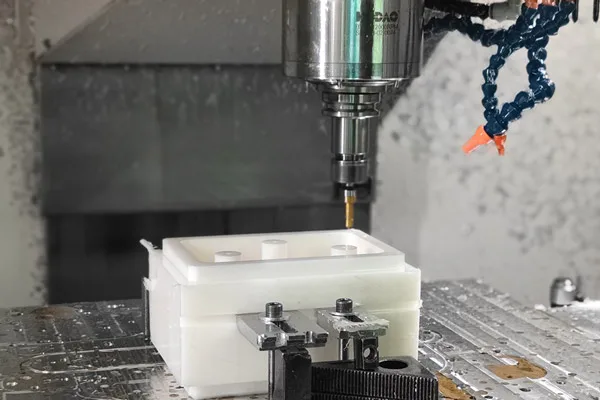
CNC machining
Why Precision Manufacturing Matters
Ensures High-Quality Products
Precision manufacturing minimizes errors and variability, resulting in products that consistently meet or exceed quality standards. High-quality products are more durable, reliable, and less prone to failure, which enhances customer satisfaction and brand reputation.
Improves Product Performance
Tight tolerances and exact specifications are crucial for optimal performance, especially in complex assemblies or high-tech applications. Precision manufacturing ensures that components fit together perfectly, reducing issues like misalignment, vibration, or mechanical failure, thereby enhancing overall functionality.
Reduces Waste and Costs
By producing parts with minimal errors and rework, precision manufacturing reduces material waste, labor costs, and production time. This efficiency translates into cost savings, making your products more competitive in pricing without compromising quality.
Enables Innovation and Complex Designs
Advanced manufacturing techniques, such as CNC machining, laser cutting, and additive manufacturing, allow for the creation of complex geometries and innovative designs that would be impossible with traditional methods. Precision manufacturing opens doors to new product features and functionalities.
Ensures Regulatory Compliance
Many industries—such as aerospace, medical, and automotive—are highly regulated and require strict adherence to safety and quality standards. Precision manufacturing helps meet these rigorous requirements, facilitating regulatory approvals and certifications.
Enhances Customer Satisfaction and Loyalty
Products that perform reliably and last longer foster trust and loyalty among customers. Precision manufacturing not only builds a reputation for quality but also reduces warranty claims and after-sales service costs.
Applications of Precision Manufacturing
Precision manufacturing is integral to a wide range of industries, including:
- Aerospace: Critical components like turbine blades, fuselage parts, and avionics require exact tolerances for safety and performance.
- Medical Devices: Implants, surgical instruments, and diagnostic equipment demand high precision for biocompatibility and functionality.
- Automotive: Engine components, transmission parts, and safety systems rely on precision to ensure safety and efficiency.
- Electronics: Microchips, connectors, and housings need exact specifications for proper operation.
- Consumer Goods: High-end watches, sports equipment, and luxury items benefit from precision craftsmanship.
Challenges in Precision Manufacturing
While the benefits are clear, achieving precision manufacturing also presents challenges:
High Initial Investment: Advanced machinery and skilled labor require significant capital investment.
Complexity: Maintaining tight tolerances consistently demands rigorous quality control and process monitoring.
Material Limitations: Some materials are more difficult to machine or shape precisely, requiring specialized techniques.
Despite these challenges, the long-term benefits of precision manufacturing—such as superior product quality, reduced costs, and competitive advantage—far outweigh the initial hurdles.
Conclusion
In an increasingly demanding marketplace, precision manufacturing is no longer a luxury but a necessity for producing high-quality, reliable, and innovative products. It ensures that every component meets strict standards, improves overall performance, and enhances customer satisfaction. Investing in precision manufacturing processes and technologies positions your company at the forefront of quality and innovation, helping you build a strong reputation and achieve long-term success.