
Overmolding and insert molding are far more than routine manufacturing processes – they are essential techniques for combining dissimilar materials into unified, high-performance components. They give us the comfortable grip on a power tool and the durable housing of a medical device. Operating behind the scenes, these methods reduce assembly complexity while improving product reliability. From everyday household electronics to sophisticated automotive systems, countless parts rely on these processes daily. By minimizing the need for adhesives, screws, or other fasteners, overmolding and insert molding simultaneously lower production costs and streamline manufacturing workflows. That is why they have become indispensable tools in both rapid prototyping and high-volume mass production. This article explores both processes, compares them, and guides you on selecting the appropriate method for your application.
Key Similarities Between Overmolding and Insert Molding
Both overmolding and insert molding are molding techniques that involve encapsulating or combining different materials to enhance functionality, aesthetics, or durability. They share common features:
Material Integration: Both processes combine multiple materials into a single component.
Enhanced Functionality: They improve grip, appearance, chemical resistance, or mechanical properties.
Complex Geometries: Capable of producing intricate shapes and features.
Cost Efficiency: Reduce assembly steps and simplify manufacturing.
Despite these similarities, their core differences lie in their specific applications, methods, and resultant component characteristics.
|
Aspect |
Overmolding |
Insert Molding |
| Definition | Applying a new layer of material over a substrate | Molding around pre-placed inserts within a mold |
| Primary Purpose | Enhancing grip, aesthetics, or sealing | Incorporating metal or other inserts into plastic parts |
| Materials Used | Typically soft, flexible, or aesthetic materials | Rigid inserts like metals, ceramics, or other substrates |
| Process Complexity | Moderate to high | Moderate, depends on insert handling |
| Typical Applications | Grips, soft-touch surfaces, cosmetic features | Electrical connectors, threaded inserts, structural parts |
| Post-Molding Assembly | No (integrated during molding) | No (inserted during molding process) |
What Is Overmolding?
Overmolding is a specialized manufacturing process in which a second material—typically a soft, flexible, or high-performance polymer—is molded directly onto a pre-existing substrate or component. The result is a single, integrated part made from two or more materials, each contributing unique properties.
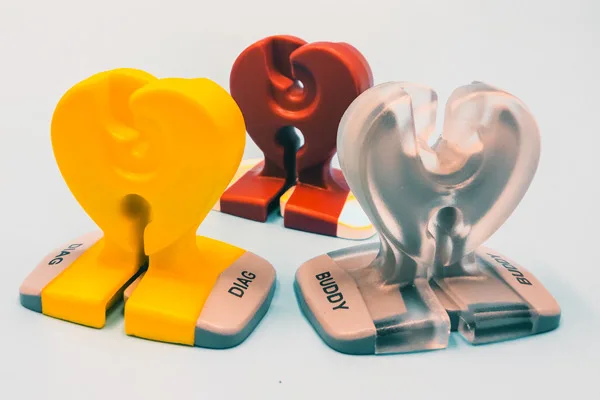
Over molding parts
Typical Materials Used in Overmolding
Substrate Materials: ABS, polycarbonate, polypropylene.
Overmold Materials: TPEs, silicones, soft-touch plastics, elastomers.
Advantages and Disadvantages of Overmolding
Advantages:
Improved grip and tactile feel.
Enhanced aesthetics.
Reduced assembly steps.
Better environmental sealing.
Disadvantages:
Increased tooling costs.
Potential bonding issues.
Limited to compatible materials.
Common Issues in Overmolding
Poor adhesion between layers.
Warping or sink marks.
Material flow problems.
What Is Insert Molding?
Insert molding is a manufacturing process that embeds a pre-fabricated component—typically made of metal, ceramic, or another rigid material—directly into a plastic part during the molding cycle. The insert is placed into the mold cavity before injection; molten thermoplastic is then injected around it. After cooling and solidification, the plastic shrinks slightly, locking the insert firmly in place. The final product is a single, integrated part where the insert is permanently and securely embedded.
Typical Materials Used in Insert Molding
Inserts: Metals (steel, aluminum), ceramics, composites.
Molding Materials: Polypropylene, ABS, polycarbonate, nylon.
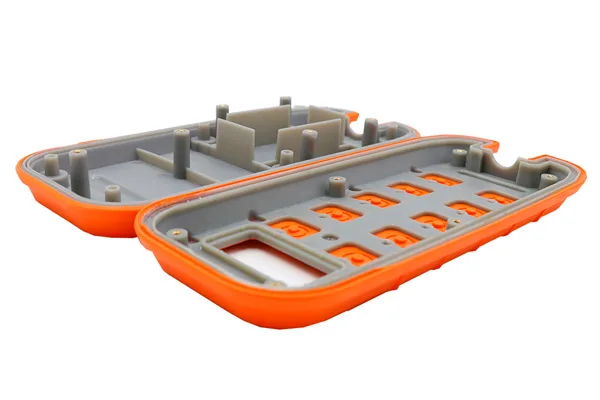
Insert molding parts
Advantages and Disadvantages of Insert Molding
Advantages:
Strong mechanical bonds.
Reduced assembly time.
Precise placement of inserts.
Disadvantages:
Higher tooling complexity.
Potential for insert damage during molding.
Material compatibility considerations.
Common Issues in Insert Molding
Insert shifting during molding.
Poor adhesion or bonding failures.
Insert surface damage.
What are the Common Applications of Overmolding and Insert Molding?
Overmolding Applications
- Soft grips on power tools.
- Cosmetic surfaces on consumer electronics.
- Seals and gaskets.
- Medical devices requiring biocompatibility and tactile features.
- Wearables: Silicone overmolded onto rigid sensor housings for fitness trackers.
Insert Molding Applications
- Electrical connectors with metal contacts.
- Metal threaded inserts for assembly.
- Structural components requiring reinforcement.
- Automotive parts with embedded metal parts.
- Battery packs: Metal terminals and busbars encapsulated in flame-retardant plastic.
When to Choose Overmolding or Insert Molding
Choose Overmolding when you need to add a soft, aesthetic, or sealing layer onto an existing part, especially for grips, buttons, or cosmetic features.
Choose Insert Molding when incorporating metal or rigid inserts into plastic parts for structural strength, electrical contacts, or threaded components.
Conclusion
Both overmolding and insert molding are vital manufacturing techniques that enhance product performance and design. Understanding their processes, materials, advantages, and limitations enables engineers and manufacturers to select the most suitable method for their specific applications. Whether adding tactile surfaces or embedding functional inserts, choosing the right molding process leads to higher quality, cost-effective, and innovative products. As manufacturing technologies continue to evolve, so too will overmolding and insert molding. Innovations in materials science, automation, and sustainable practices promise to expand their capabilities, making these processes even more integral to the future of high-performance, eco-friendly, and intelligent product designs.