
CNC machining has become an integral part of modern automotive manufacturing. Its ability to produce precise, complex, and high-quality components has transformed how automakers design, develop, and produce vehicle parts. From prototyping to mass production, CNC technology offers numerous advantages that help meet the industry’s demanding standards for performance, safety, and efficiency. This comprehensive article explores the various applications of CNC machining in the automotive sector, the benefits it provides, and how it compares to other manufacturing methods.
Automotive Industry and CNC Machining
The automotive industry relies heavily on manufacturing processes that can deliver high precision, repeatability, and flexibility. CNC machining fulfills these requirements by enabling the production of detailed components with tight tolerances. Its versatility allows for the machining of a wide range of materials, shapes, and sizes, making it suitable for everything from engine parts to interior trims.
CNC machines are used throughout the entire vehicle development cycle—from initial prototyping and testing to full-scale production. The ability to rapidly adapt designs and produce small batches or large quantities makes CNC machining a crucial tool for automotive manufacturers aiming for innovation and efficiency.
Advantages of CNC Machining in the Automotive Industry
CNC machining offers several significant benefits for automotive manufacturing:
High Precision and Accuracy: CNC machines can produce parts with tolerances often within thousandths of an inch, ensuring perfect fit and function.
Complex Geometries: Capable of machining intricate designs that are difficult or impossible with manual methods or traditional manufacturing.
Repeatability: Once programmed, CNC machines can produce identical parts consistently, vital for mass production.
Material Versatility: Suitable for metals, plastics, composites, and other materials used in automotive parts.
Reduced Lead Times: Rapid prototyping and quick adjustments to designs streamline development cycles.
Cost-Effective for Small Batches: Ideal for low-volume production runs, custom parts, or prototypes without the need for expensive molds.
Automation and Reduced Labor Costs: CNC machines require minimal manual intervention, reducing labor costs and minimizing human error.
The Role of CNC Machining in Automotive Prototyping
Prototyping is a critical phase in automotive design, allowing engineers to test form, fit, and function before mass production. CNC machining excels in this area because it enables rapid creation of prototype parts with high accuracy.
Automakers use CNC machines to produce functional prototypes for evaluating new designs, testing aerodynamics, fitment, and durability. The flexibility of CNC machining allows for quick modifications—adjusting CAD models and reprogramming machines—thus accelerating the development process. This rapid prototyping capability reduces time-to-market and helps identify potential issues early, saving costs and resources.
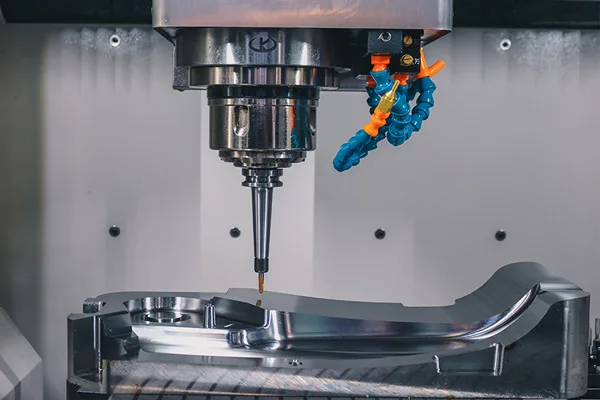
CNC machining
Automotive Parts Mass-Produced Using CNC Machining Technology
CNC machining is employed to mass-produce a wide array of automotive components, including:
Engine Components: Cylinder heads, pistons, valves, crankshafts, and camshafts.
Transmission Parts: Gears, shafts, and housings.
Chassis and Structural Elements: Lightweight frames, brackets, and supports.
Interior Components: Dashboard panels, knobs, switches, and brackets.
Exterior Parts: Grilles, bumpers, decorative trims, and mirror housings.
Electronic Housings: Connectors, mounts, and enclosures for electronic systems.
Tooling and Fixtures: Custom jigs, molds, and assembly fixtures.
The ability to produce these parts with high precision ensures quality, safety, and performance standards are met across all vehicle models.
Common Materials Used for CNC Machined Automotive Parts
Automotive CNC machining involves a variety of materials, selected based on strength, weight, durability, and cost considerations. Common materials include:
Aluminum: Lightweight, corrosion-resistant, and easy to machine; widely used for engine parts, structural components, and housings.
Steel: Known for its strength and durability; used in drivetrain components, chassis parts, and high-stress elements.
Magnesium: Extremely lightweight and strong; used in performance and racing applications.
Plastics: ABS, polycarbonate, nylon, and acetal; used for interior components, electronic housings, and lightweight parts.
Composites: Carbon fiber-reinforced plastics for high-performance applications requiring lightweight strength.
Types of CNC Machines Used in Automotive Manufacturing
Several types of CNC machines are employed in the automotive sector, each suited for specific tasks:
- Vertical Machining Centers (VMC): Most common; used for precision milling of complex parts.
- Horizontal Machining Centers (HMC): Suitable for larger, heavier parts requiring high accuracy.
- CNC Lathes: Ideal for turning cylindrical parts like shafts and bolts.
- Mill-Turn Machines: Combine milling and turning capabilities, useful for complex, multi-axis parts.
- 5-Axis CNC Machines: Offer high flexibility for complex geometries and multi-surface machining, often used in high-performance components.
- Wire EDM Machines: Used for creating intricate shapes and fine details, especially in tool and die making.
Advancements in Automation and Smart Manufacturing
Modern CNC machining in the automotive sector is increasingly characterized by automation and data-driven manufacturing. Robotic arms are commonly integrated with CNC machines for automated loading and unloading of raw materials and finished parts, enabling lights-out production runs that maximize machine utilization, particularly during overnight shifts and weekends. Smart sensors and Internet of Things (IoT) connectivity allow real-time monitoring of tool wear, vibration, spindle load, and temperature, enabling predictive maintenance that minimizes costly unplanned downtime. Furthermore, advanced CAM software incorporates simulation and optimization algorithms that reduce cycle times, minimize air-cutting movements, and extend tool life through adaptive feed-rate control. Digital twin technology allows manufacturers to simulate the entire machining process virtually before cutting any metal, identifying potential collisions, fixture interference, or thermal distortion issues upfront. These technological enhancements make CNC machining not only more efficient but also more reliable for the rigorous demands of high-volume automotive production, while simultaneously reducing scrap rates and energy consumption.
CNC Machining Costs Versus Other Automotive Manufacturing Techniques
CNC machining’s cost-effectiveness varies based on production volume and part complexity. For low to medium volumes, CNC machining often proves more economical than traditional methods like casting or forging due to:
- Lower tooling costs: No need for expensive molds or dies.
- Flexibility: Easy to modify designs without significant cost increases.
- High precision: Reduces waste and rework costs.
However, for high-volume production, methods like injection molding or die casting may become more economical due to lower per-unit costs once molds are made. Nonetheless, CNC machining remains essential for prototypes, small batch runs, and parts requiring tight tolerances or complex geometries.
Comparing 3D Printing and CNC Machining: Differences in Automotive Manufacturing
While both 3D printing and CNC machining are additive and subtractive manufacturing techniques respectively, they serve different roles:
- CNC Machining: Produces high-precision, durable parts suitable for functional components and mass production. It works well with metals and plastics, offering excellent surface finish and tight tolerances.
- 3D Printing: Ideal for rapid prototyping, complex geometries, and low-volume custom parts. It enables quick design iterations but typically offers lower strength and surface finish compared to CNC.
Injection Molding vs. CNC Machining: Key Differences in Automotive Manufacturing
Injection molding and CNC machining are both widely used manufacturing methods, but they differ significantly:
- Injection Molding: Suitable for high-volume production of plastic parts. It requires creating molds, which involves high upfront costs but offers low per-part costs at scale.
- CNC Machining: Better suited for low to medium volumes, prototypes, and complex parts that are difficult to mold. It offers higher flexibility without the need for costly molds but may have higher per-unit costs for large runs.
Quality Assurance and In-Process Inspection in Automotive CNC Machining
Given the critical safety considerations associated with many automotive components, quality assurance is integrated at every stage of the CNC machining process. In addition to traditional post-production inspections using coordinate measuring machines (CMMs) and optical comparators, modern automotive manufacturing increasingly utilizes in-process measurement systems. These systems, such as touch-trigger probes and laser scanners mounted directly on CNC spindle tools, enable real-time measurement of essential features—including bore diameters, depth tolerances, and surface flatness—while the workpiece remains securely fixed in the machine. This immediate feedback allows for automatic adjustments to tool offsets, compensating for wear, thermal expansion, or slight deviations before the part moves out of specification. Furthermore, statistical process control (SPC) software collects measurement data from large production runs, helping to detect subtle shifts in machine performance and facilitating proactive maintenance. For high-criticality parts like brake pistons and steering linkage components, 100% inspection is often required. In such cases, CNC systems equipped with integrated gauging and inspection capabilities ensure every part complies with the stringent dimensional and geometric tolerances necessary for automotive safety and certification standards.
Conclusion
CNC machining has become a cornerstone of automotive manufacturing, enabling the production of precise, complex, and high-quality components across a wide range of applications. Its advantages—such as high accuracy, material versatility, and quick turnaround—make it indispensable from prototyping to mass production. As the automotive industry continues to evolve toward lighter, stronger, and more sophisticated vehicles, CNC technology will remain vital in driving innovation and maintaining competitiveness.
Understanding the various applications, materials, and machine types involved in CNC machining empowers automakers and suppliers to optimize their manufacturing processes and deliver better vehicles to consumers worldwide. Embracing CNC machining not only improves product quality but also accelerates development cycles, ultimately shaping the future of automotive engineering.