
Computer Numerical Control (CNC) machining has revolutionized the manufacturing industry by enabling precise, automated, and repeatable production of complex parts. As industries demand faster turnaround times, higher quality, and cost-effective solutions, optimizing CNC machining processes has become essential. Leveraging the latest technological advancements and best practices can significantly enhance efficiency, reduce waste, and boost overall productivity.
This comprehensive guide explores key strategies, innovative technologies, and practical tips to optimize your CNC machining operations for maximum efficiency.
Understanding CNC Machining and Its Potential
CNC machining involves the use of computer-controlled tools to remove material from workpieces to create desired geometries. Its precision and automation capabilities make it suitable for producing intricate parts across aerospace, automotive, medical, and electronics sectors.
However, despite its advantages, CNC machining processes can be resource-intensive if not properly optimized. Factors such as tool selection, programming, machine maintenance, and workflow management play critical roles in achieving optimal performance.
Key Strategies for Enhancing CNC Machining Efficiency
Utilize Advanced CAD/CAM Software
Modern CAD (Computer-Aided Design) and CAM (Computer-Aided Manufacturing) software offer powerful features such as simulation, toolpath optimization, and error detection. Using these tools can:
- Minimize material waste
- Reduce machining time
- Prevent collisions and errors
- Generate efficient toolpaths
Tip: Invest in CAD/CAM solutions that incorporate AI-driven optimization algorithms for smarter planning.
Implement High-Speed Machining (HSM)
High-Speed Machining techniques utilize faster spindle speeds and feed rates to dramatically reduce machining time while maintaining surface quality. HSM is particularly effective for:
- Aluminum components
- Thin-walled structures
- Complex contours
Technology: Modern CNC machines equipped with high-frequency spindles and advanced controllers enable HSM, leading to smoother finishes and shorter cycle times.
Automate Tool Changes and Setup
Automation reduces downtime between operations. Features such as automatic tool changers (ATC) and pallet changers allow seamless transitions, increasing throughput.
Tip: Use tool management software to track tool wear and automate maintenance scheduling, ensuring optimal tool performance.
Optimize Tool Selection and Cutting Parameters
Selecting the right tools and parameters is critical. Factors to consider include:
- Tool Material (carbide, ceramic)
- Tool Geometry
- Cutting Speed and Feed Rate
- Depth of Cut
Benefit: Proper optimization minimizes tool wear, reduces cycle times, and improves surface finish.
Leverage CNC Machine Monitoring and IoT Integration
Real-time monitoring systems gather data on machine performance, tool health, and production metrics. IoT-enabled solutions can:
- Predict maintenance needs
- Detect anomalies early
- Optimize operation schedules
Outcome: Reduced machine downtime and increased throughput.
Implement Automated Quality Control
Integrate inspection systems such as coordinate measuring machines (CMM) and vision inspection into the workflow. Automated quality checks minimize rework and ensure parts meet specifications.
- Advantage: Faster feedback loops and higher quality assurance.
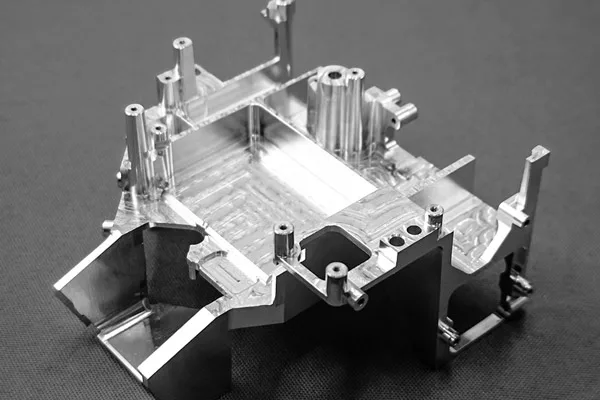
CNC machining parts
Cutting-Edge Technologies Driving CNC Efficiency
Artificial Intelligence (AI) and Machine Learning
AI algorithms analyze production data to optimize toolpaths, predict failures, and suggest process improvements. Machine learning models adapt over time, leading to smarter, more efficient operations.
Additive Manufacturing Integration
Hybrid CNC machines combine subtractive and additive processes, allowing for complex part fabrication with reduced material waste and fewer manufacturing steps.
Advanced Machine Controllers
Modern CNC controllers feature multi-axis control, advanced interpolation, and adaptive control systems that adjust cutting parameters dynamically for optimal performance.
Robotics and Automation
Robotic arms handle part loading/unloading, tool changing, and even finishing operations, freeing up human operators for higher-level tasks and reducing cycle times.
Real-World Applications: Where Optimization Delivers Measurable Results
Aerautics: Reducing Cycle Time on Critical Components
A leading aerospace supplier faced challenges machining thin-walled titanium structural brackets. The cycle times are excessive due to conservative feeding and speed, and the tool life is unpredictable. By implementing high-speed machining tool paths, high-pressure coolant through spindles, and real-time tool condition monitoring, the company has reduced roughing time by 40 percent, extended tool life by 25 percent, and eliminated unpredictable tool failures. The result is a consistent, predictable flow of production that meets demanding delivery schedules.
Automotive: Lights-Out Manufacturing for High-Mix Components
An automotive aftermarket manufacturer that produces hundreds of different low-volume components implemented a flexible manufacturing system with pallet changers, automated workflows and offline CAM simulation. With the ability to run unattended overnight and on weekends, spindle utilization increased from 35% to 78%. The time per job has been reduced from an average of 45 minutes to less than 8 minutes, enabling profitable production of batch sizes as small as five units.
Medical Devices: Integrating In-Process Inspection
A manufacturer of orthopedic implants faces quality challenges with complex 5-axis components. Rework rates were running at 12% due to dimensional variations. By integrating in-process inspection with adaptive control and automated post-process CMM inspection linked back to the CAM system, the company reduced rework to less than 2 percent and reduced inspection lead times by 60 percent. Closed-loop feedback allows tool wear compensation to be applied automatically to subsequent parts, ensuring consistent quality across production runs.
Best Practices for Sustained CNC Optimization
Regularly maintain machines and tools to prevent unexpected breakdowns.
Continuously train operators on new technologies and techniques.
Use data analytics to identify bottlenecks and areas for improvement.
Foster collaboration between design, engineering, and manufacturing teams for process alignment.
Conclusion
Optimizing CNC machining is a continuous journey that combines technological innovation with strategic process management. By leveraging advanced software, high-speed machining, automation, IoT, and AI, manufacturers can achieve significant gains in efficiency, quality, and cost savings. Staying ahead in this competitive landscape requires embracing these technologies and implementing best practices to unlock the full potential of CNC machining.
Investing in CNC optimization not only enhances productivity but also positions your business for sustainable growth and technological leadership in the manufacturing industry.