
High-volume injection molding is a manufacturing process used to produce large quantities of consistent plastic parts. It is common in industries such as automotive, consumer electronics, medical devices, packaging, and household products.
The process can deliver parts quickly and economically once production is underway. However, success depends on careful product design, material selection, tooling, and quality control. This guide explains the main stages and considerations involved.
How Injection Molding Works
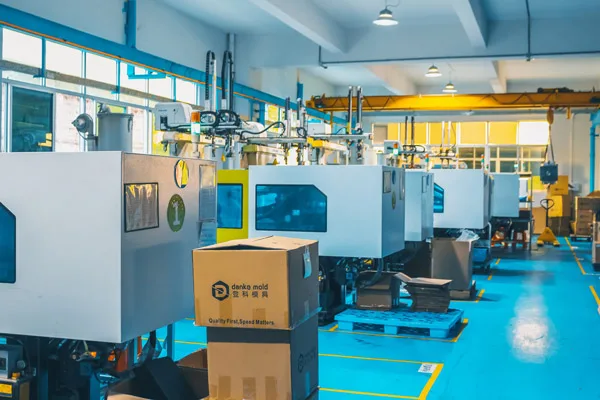
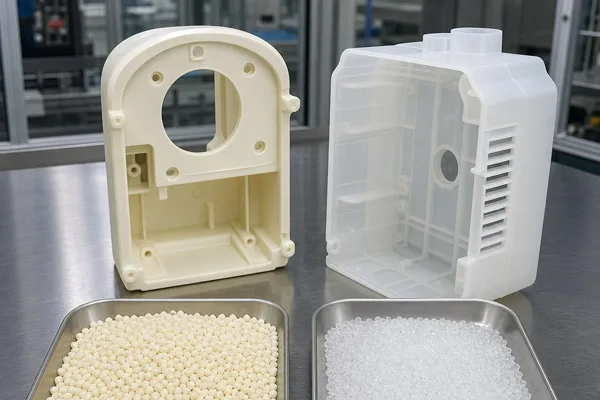
Injection molding begins with plastic resin, usually supplied as small pellets. The pellets are heated until molten, then injected under pressure into a closed mold. The plastic cools and hardens into the shape of the mold cavity. The mold opens, and the finished part is ejected.
Why Use High-Volume Injection Molding?
Injection molding is especially useful when a business needs many identical parts. Although tooling can be expensive, the cost per part can become low when production volumes are high.
Key benefits include:
- High production rates: Many parts can be produced in a short time.
- Consistent results: A well-designed process can produce repeatable parts.
- Complex shapes: Molds can form detailed features and integrated components.
- Material flexibility: Many thermoplastics and specialty materials are available.
- Low unit cost at scale: Tooling costs are spread across a large production run.
The process is less suitable for very small quantities, frequent design changes, or parts that are not yet finalized.
Designing Parts for Molding
Good part design helps prevent defects, reduce production costs, and extend mold life. Design decisions should be reviewed with the manufacturer before tooling begins.
Wall thickness
Keeping wall thickness reasonably uniform helps the part cool evenly. Sudden changes in thickness can cause sink marks, warping, or internal stress. Where possible, use gradual transitions rather than bulky sections.
Draft angles
Molded parts need slight angled surfaces, called draft, so they can be released from the mold. Without enough draft, parts may stick, become scratched, or require more complex tooling.
Ribs and bosses
Ribs can strengthen a part without making its walls excessively thick. Bosses provide mounting points for screws or inserts. Both should be designed carefully to avoid sink marks and other surface defects.
Undercuts and parting lines
Features that prevent a part from being pulled straight out of the mold may require slides, lifters, or other mechanisms. These can increase tooling complexity and cost. The parting line—the point where the mold halves meet—should also be planned to avoid visible marks on important surfaces.
Tolerances
Tolerances describe how much a part’s dimensions may vary. Tighter tolerances can require more precise tooling and process control, increasing cost. Specify tight tolerances only where they are necessary for function or assembly.
Choosing a Plastic Material
Material selection affects strength, flexibility, appearance, cost, and performance in the final environment. Common choices include:
- Polypropylene (PP): Lightweight and resistant to many chemicals.
- Polyethylene (PE): Tough and commonly used for containers and packaging.
- ABS: Durable and often used for housings and consumer products.
- Polycarbonate (PC): Strong and impact-resistant, with options for transparency.
- Nylon: Useful for parts that need strength and wear resistance.
- Acetal (POM): Often selected for precision parts with moving or sliding surfaces.
The right choice depends on the part’s operating temperature, expected loads, exposure to chemicals or sunlight, appearance requirements, and applicable regulations. Material suppliers can provide technical data to support selection.
 Mold Design and Tooling
The mold is one of the most important investments in a high-volume project. It must withstand repeated cycles while producing parts that meet dimensional and cosmetic requirements.
A mold may include:
- Cavities: Shape the outside of the part.
- Core features: Form internal surfaces and openings.
- Gates: Control where molten plastic enters the cavity.
- Runners: Carry plastic from the machine nozzle to the gates.
- Cooling channels: Help control the mold’s temperature.
- Ejector system: Releases the finished part.
Tooling materials, mold complexity, number of cavities, and expected production volume all affect cost and lead time. A multi-cavity mold can produce several parts per cycle, but it may require more investment and careful balancing.
Before full production, manufacturers commonly conduct trial runs to check filling, cooling, ejection, dimensions, and appearance. Any necessary changes are easier to make before the mold enters routine production.
Managing the Production Process
Once the mold and material are ready, the process must be set up and monitored. Important variables include:
- Injection pressure and speed
- Melt and mold temperatures
- Cooling time
- Clamp force
- Material drying and handling
Changes to these settings can affect part quality and cycle time. A stable process helps reduce scrap and maintain consistency across production batches.
Quality Control
Quality control should be planned before mass production begins. Depending on the product, inspections may include:
- Dimensional checks
- Visual inspection for flash, sink marks, or discoloration
- Fit and assembly tests
- Strength or performance testing
- Material and batch traceability
A clear inspection plan defines which features matter most, how they will be measured, and how often samples will be checked. Monitoring production data can also help identify problems before they affect a large number of parts.
Common Defects
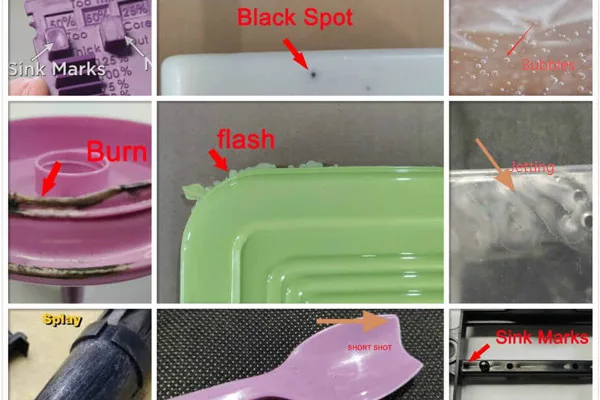
Several defects can occur if the design, tooling, material, or process is not properly controlled:
Sink marks: Depressions caused by uneven cooling or thick sections.
Flash: Thin excess plastic escaping between mold surfaces.
Short shots: Incomplete parts caused by insufficient filling.
Warpage: Distortion from uneven cooling or internal stress.
Weld lines: Visible lines where separate flows of plastic meet.
Burn marks: Discoloration caused by trapped air or excessive heat.
Many defects can be reduced through better part design, mold venting, temperature control, and process adjustment.
 Cost and Production Planning
The total cost of an injection-molding project includes more than the price of each part. It may include:
- Mold design and manufacturing
- Material and colorants
- Machine time and labor
- Quality inspections
- Packaging and shipping
- Maintenance and future tooling changes
High-volume production can lower the per-part cost, but only when demand justifies the initial investment. Before committing to tooling, confirm that the design is sufficiently finalized and estimate production quantities, quality requirements, and future demand.
For projects that need design validation before production tooling is ready, CNC machining can provide prototypes or small batches of parts. Injection molding can then support larger production runs once the design is finalized. When evaluating a CNC machining + injection molding supplier in China, compare its capabilities in both processes, as well as its material options, quality controls, communication, lead times, and shipping arrangements. Keep in mind that CNC-machined prototypes may not behave exactly like molded parts, so validate critical features using the intended production material and process whenever possible.
Conclusion
High-volume injection molding is a powerful way to manufacture large quantities of consistent plastic parts. Its advantages—speed, repeatability, and low unit cost at scale—make it suitable for many mass-production applications.
The best results come from planning early: design parts for moldability, choose materials for the product’s real operating conditions, invest in suitable tooling, and establish quality controls before production begins. With these elements in place, injection molding can support efficient, reliable manufacturing from the first production run through long-term supply.