
In the rapidly evolving world of electronics, precision, efficiency, and innovation are paramount. From smartphones and tablets to sophisticated medical devices and aerospace systems, the demand for high-quality, miniaturized, and reliable electronic components continues to grow exponentially. Central to meeting these demands is the role of CNC (Computer Numerical Control) machining—a manufacturing process that has become indispensable in the production of electronic components and their supporting structures. This article explores the multifaceted role of CNC machining in the electronics industry, highlighting its significance in design, manufacturing, quality assurance, and innovation.
Understanding CNC Machining
CNC machining is a subtractive manufacturing process in which computer-controlled machines remove material from a solid block to create precise components. The process involves programming a computer with detailed instructions (G-code) that guide the movement of cutting tools, enabling the production of complex geometries with high accuracy and repeatability. CNC machining encompasses various techniques such as milling, turning, drilling, and tapping, making it versatile for a wide range of applications.
Additionally, CNC machining can be categorized into different operational types, including 3-axis, 4-axis, and 5-axis machining, each offering varying degrees of freedom and complexity. The choice of machine depends on the specific requirements of the component, such as the number of features, surface finish quality, and production volume. Moreover, modern CNC systems often integrate with advanced sensors and feedback loops that monitor tool wear and temperature in real time, ensuring consistent output quality even during long production runs.
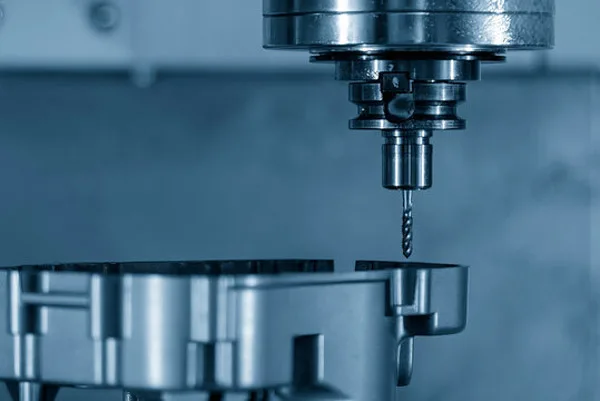
CNC machined parts
The Role of CNC Machining in Electronics Manufacturing
Production of Precise Mechanical Components
Electronic devices are often assembled with intricate mechanical parts such as enclosures, brackets, heatsinks, and connectors. CNC machining provides the precision required to produce these components with tight tolerances, ensuring proper fit and function. For example, custom enclosures designed for sensitive electronics must be manufactured with precision to ensure electromagnetic shielding, thermal management, and structural integrity.
Moreover, CNC machining enables the production of lightweight yet robust components that are critical for portable and wearable electronics. The ability to machine complex internal cavities and thin-walled structures allows engineers to optimize space utilization within the device, contributing to overall miniaturization efforts. In addition, the high-precision surface finish achieved through the CNC process reduces friction and wear in the moving parts, thereby extending the operational life of the electronic assemblies.
Fabrication of Prototypes and Small Batches
In the electronics industry, innovation and rapid development cycles necessitate the quick production of prototypes. CNC machining allows manufacturers to swiftly create prototypes for testing and validation, enabling iterative design improvements. Additionally, for small batch productions or specialized components, CNC machining offers a cost-effective solution compared to traditional mold-based manufacturing.
In fact, the ability to produce functional prototypes with actual production-grade materials is a distinct advantage of CNC machining. This capability allows engineers to conduct real-world performance tests under various environmental conditions, identifying potential design flaws early in the development cycle. Moreover, CNC machining supports concurrent engineering approaches, where design modifications can be implemented on the fly without lengthy tooling changes, significantly compressing product development timelines.
Manufacturing of Micro-Features and Complex Geometries
Modern electronic components often feature micro-scale features, complex internal channels, or intricate geometries that are difficult to produce using conventional methods. CNC machining, especially with advancements like micro-milling and high-precision tools, can produce these micro-features with high accuracy, supporting the development of miniaturized and sophisticated electronic parts.
Beyond tooling, CNC machining is directly involved in certain PCB fabrication steps such as routing and profiling, where excess material is trimmed to define the final board profile. It is also used to drill precision holes for vias and component leads, with modern CNC drilling machines capable of producing thousands of holes per minute with positional accuracy down to a few microns. In semiconductor packaging, CNC-machined lead frames and heat spreaders are critical to ensure electrical connectivity and thermal dissipation in high-performance chips.
Support for PCB and Semiconductor Production
While printed circuit boards (PCBs) and semiconductors are primarily produced through specialized processes such as etching and deposition, CNC machining plays a crucial role in creating the physical infrastructure supporting these components. For instance, CNC-machined fixtures, jigs, and assembly tools are essential for the precise handling and assembly of delicate electronic parts.
Material Versatility and Compatibility
CNC machining can work with a broad range of materials including aluminum, copper, plastics, and composites—materials frequently used in electronic housings, connectors, and circuit boards. This versatility ensures that the industry can select the best material for thermal management, electromagnetic shielding, or structural requirements.
Quality Control and Consistency
High-volume electronic manufacturing demands consistency and adherence to strict quality standards. CNC machines excel in delivering repeatability, ensuring that each component meets specified dimensions and tolerances. This consistency is vital for the reliability and safety of electronic devices.
CNC machining systems are increasingly integrated with in-process inspection technologies such as touch probes, laser scanners, and vision systems that perform real-time dimension verification. This closed-loop feedback mechanism allows for immediate corrective action if deviations are detected, effectively minimizing the scrapping rate and rework cost. Statistical process control (SPC) data generated during machining runs also facilitates continuous improvement initiatives, ensuring that manufacturing processes remain robust and capable over extended production cycles.
Advancements in CNC Technology and Their Impact
Recent technological advancements have further amplified the role of CNC machining in electronics:
- Micro CNC Machining: Allows for the production of tiny, highly detailed components essential for modern electronics.
- Multi-Axis Machining: Enables complex geometries and internal features that are difficult to achieve with traditional methods.
- Automation and Integration: CNC machines integrated with CAD/CAM software streamline the design-to-manufacturing process, reducing lead times.
- High-Speed Machining: Increases productivity and reduces manufacturing costs, making rapid prototyping and small batch production more feasible.
The adoption of IoT connectivity in CNC devices enables predictive maintenance and remote monitoring, reducing unplanned downtime and improving overall device effectiveness. Artificial intelligence algorithms are also being deployed to dynamically optimize cutting parameters, balancing tool lifetime, surface quality, and cycle time based on real-time sensor inputs. Moreover, the rise of digital twins – virtual replicas of physical machining processes – allows manufacturers to simulate and refine production strategies before any material is cut, significantly reducing trial-and-error costs and accelerating time-to-market.
Challenges and Future Outlook
Despite its numerous advantages, CNC machining also faces challenges such as high initial setup costs, material limitations, and the need for skilled operators. However, ongoing innovations such as additive manufacturing integration, AI-driven process optimization, and more affordable micro-machining solutions are poised to address these challenges.
Looking ahead, CNC machining will continue to play a pivotal role in the electronics industry’s evolution. As electronic devices become increasingly compact, complex, and integrated with emerging technologies like IoT and AI, the demand for precise, adaptable, and efficient manufacturing processes will only grow. CNC machining, with its versatility and precision, is well-positioned to meet these future challenges and support the continued innovation in electronics.
Conclusion
CNC machining is more than just a manufacturing process; it is a cornerstone of modern electronics production. Its ability to produce precise, complex, and reliable components makes it indispensable for designers, engineers, and manufacturers striving to push the boundaries of electronic innovation. As technology advances, CNC machining will undoubtedly remain at the forefront of electronic component fabrication, driving the industry toward new heights of performance, miniaturization, and sophistication.