
The automotive industry continually seeks innovative manufacturing techniques to produce lightweight, durable, and cost-effective components that enhance vehicle safety, comfort, and aesthetics. Among these techniques, compression molding has emerged as a vital process in the fabrication of various interior parts, notably automotive seat backs. This article provides a comprehensive exploration of the application of compression molding in manufacturing automotive seat backs, highlighting its advantages, materials used, process steps, and the benefits it offers to manufacturers and consumers alike.
Introduction to Compression Molding in Automotive Industry
Compression molding is a manufacturing process where a pre-measured amount of material, typically a thermosetting plastic or composite, is placed into an open mold cavity. The mold is then closed, and heat and pressure are applied to shape the material into the desired component. Once cooled and cured, the mold opens, revealing a solid, high-quality part.
In the context of automotive manufacturing, compression molding is favored for producing complex, high-strength, and lightweight parts with excellent surface finish. Its versatility makes it suitable for a wide range of interior and exterior components, including dashboards, door panels, and notably, seat backs.
Significance of Seat Backs in Automotive Design
The seat back is a critical component of vehicle interior design, providing support and comfort to passengers while also contributing to safety features such as impact absorption during collisions. Modern seat backs must combine strength, lightweight construction, ergonomic design, and aesthetic appeal. Achieving these attributes requires advanced manufacturing techniques like compression molding.
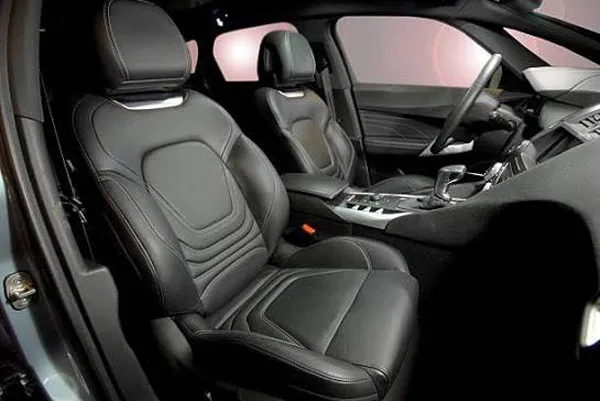
Automotive seats
Application of Compression Molding in Manufacturing Automotive Seat Backs
1. Material Selection
Resins:
Polyester: Cost-effective, good strength, fast curing.
Phenolic: Excellent heat and flame resistance.
Epoxy: Superior strength and adhesion, high durability.
Vinyl Ester: Tough, chemical-resistant, combines benefits of polyester and epoxy.
Fibers:
Fiberglass: Most common, affordable, strong, impact-resistant.
Carbon Fibers: Lightweight, very strong, used in high-performance vehicles.
Natural Fibers: Eco-friendly options like flax or hemp, lower cost but less strong.
Aramid (Kevlar): Impact-resistant, used for specialized safety features.
These materials help produce lightweight, durable seat backs that improve safety, fuel efficiency, and overall vehicle performance.
2. Design and Production of Reinforced Panels
The process begins with creating a detailed mold that matches the desired shape and surface finish of the seat back. The reinforcing fibers are pre-impregnated with resin (prepreg) or dry fibers are placed into the mold cavity, along with resin-rich layers if necessary.
During compression molding, the mold applies heat and pressure, causing the resin to cure and bond the fibers into a solid, rigid structure. The resulting component exhibits high dimensional stability, excellent surface quality, and the ability to incorporate complex geometries and textures.
3. Integration of Functional Features
Modern seat backs often incorporate integrated features such as mounting points, hinges, attachment brackets, and aesthetic surface textures. Compression molding allows these features to be molded directly into the part, reducing assembly time and costs.
4. Lightweight and Ergonomic Design
The ability to use fiber-reinforced composites enables the manufacturing of lightweight seat backs that do not compromise on strength or safety. Ergonomic contours can be molded into the part, ensuring passenger comfort and aesthetic appeal.
Advantages of Compression Molding for Automotive Seat Backs
High Strength and Impact Resistance: The use of reinforced composites ensures the seat back can withstand stresses during normal operation and in collision scenarios.
- Lightweight Construction: Reducing weight contributes to overall vehicle efficiency and performance.
- Complex Geometries and Surface Textures: The process can produce intricate shapes with textured surfaces, aligning with modern interior design trends.
- Cost-Effective for High-Volume Production: Once the mold is created, the process lends itself to rapid, consistent manufacturing, reducing per-unit costs.
- Reduced Waste: Excess material is minimized, and the process allows for precise control over material usage.
- Durability and Long Service Life: The cured composites exhibit excellent resistance to environmental factors such as moisture, temperature fluctuations, and impact.
Future Trends and Innovations
Advancements in composite materials and mold design are expanding the capabilities of compression molding in automotive applications. Innovations such as bio-based resins, recycled fibers, and automation are further enhancing sustainability and efficiency. Additionally, the integration of functional features like heating elements or sensors during molding is opening new possibilities for smart vehicle interiors.
Conclusion
Compression molding has established itself as a vital manufacturing method for producing high-quality automotive seat backs. Its ability to combine strength, lightweight construction, complex geometries, and aesthetic finishes makes it an ideal choice for modern vehicle interiors. As automotive design continues to evolve towards greater safety, efficiency, and sustainability, the role of compression molding in seat back production is poised to grow, driving innovation and excellence in automotive manufacturing.