
Nylon, which is also commonly referred to as polyamide or PA, is one of the most widely used engineering plastics in plastic injection molding. In many industries nylon materials are used for a variety of components because they provide relatively good mechanical strength, durability and resistance to wear. Because of these properties nylon has become an important material in many mechanical and industrial applications.
In plastic manufacturing, nylon materials are often selected when parts require higher strength compared with common plastics such as polypropylene (PP) or ABS. Compared with these general plastics, nylon materials usually have better mechanical performance and better resistance to friction. For this reason nylon is frequently used in mechanical components such as gears, sliding parts or other functional elements that experience repeated movement.
Another reason nylon materials are widely used is that they can be processed using injection molding. Injection molding is one of the most commonly used manufacturing processes for thermoplastics and allows complex parts to be produced with relatively high efficiency. Nylon materials generally work well in injection molding, although some conditions such as drying and mold temperature need to be considered.
There are actually many different nylon materials available, and different grades of nylon can provide different mechanical and thermal properties. Some nylons are designed to have higher strength, while others may provide better dimensional stability or lower moisture absorption. Because of this variety, engineers often choose nylon depending on the requirements of the application.
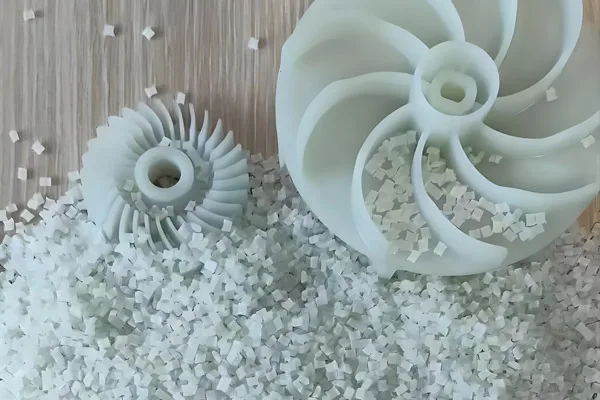
Nylon products-1
In the following sections several common nylon materials used in injection molding will be introduced, together with their properties and some typical uses.
Nylon Materials and Their Basic Characteristics
Before discussing specific nylon grades, it is useful to understand that nylon materials belong to a family of thermoplastics known as polyamides. Polyamides contain repeating amide groups in their molecular structure, and this molecular structure contributes to their mechanical strength and durability.
The naming system for nylon materials is based on the number of carbon atoms in the monomers used during the polymerization process. For example, PA6 and PA66 are named according to the carbon structure of the monomers that form the polymer chain.
Over the years, many nylon grades have been developed, including both short-chain nylons and long-chain nylons. Some nylon materials are optimized for strength and stiffness, while others are designed to improve flexibility or environmental stability.
Although there are many nylon materials available today, in most injection molding applications only a limited number of grades are commonly used. These grades are well understood in terms of processing and performance.
PA6 (Nylon 6)
PA6 is one of the most widely used nylon materials in the plastics industry. It has been used for many years and is considered a typical engineering plastic.
One of the reasons PA6 is widely used is that it provides a relatively balanced combination of mechanical properties and processability. Compared with some other engineering plastics, PA6 can be processed relatively easily in injection molding.
The melting temperature of PA6 is typically around 215–225°C. Because this melting temperature is somewhat lower than PA66, PA6 sometimes flows better during molding.
Typical characteristics of PA6 include:
- Good impact resistance
• Good wear resistance
• Relatively good moldability
• Moderate strength compared with reinforced nylons
Because of these characteristics PA6 is used in a variety of plastic products. In many cases engineers may choose PA6 because it is relatively easy to process and widely available.
Typical applications include:
- gears
• bearings
• fan blades
• housings
• consumer plastic components
However, one characteristic of PA6 that must be considered is moisture absorption. PA6 absorbs moisture from the surrounding environment, which may influence the mechanical properties or dimensions of molded parts. Because of this, drying before molding is usually necessary.
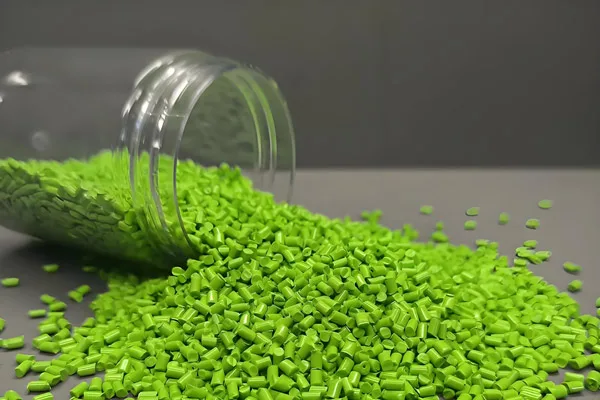
Nylon plastics-1
PA66 (Nylon 66)
Another widely used nylon material is PA66. Compared with PA6, PA66 generally provides higher strength and stiffness.
The melting temperature of PA66 is typically around 255–265°C, which is higher than PA6. Because of this higher melting temperature PA66 can sometimes perform better in environments where temperatures are elevated.
Typical characteristics of PA66 include:
- Higher stiffness than PA6
• Higher tensile strength
• Better heat resistance
Because of these characteristics PA66 is frequently used in engineering components that require higher structural performance.
Typical applications include:
- automotive components
• electrical connectors
• brackets
• mechanical housings
In many engineering designs PA66 is selected when additional stiffness or strength is required.
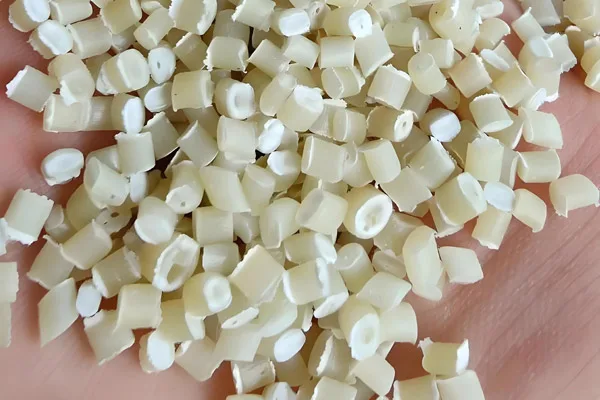
Nylon plastic-2
PA12 (Nylon 12)
PA12 is another type of nylon material that is sometimes used in injection molding. Compared with PA6 and PA66, PA12 belongs to a group known as long-chain nylons.
One important characteristic of PA12 is its relatively low moisture absorption. Because of this property PA12 may maintain better dimensional stability in humid environments.
PA12 also has good flexibility and chemical resistance.
Typical characteristics include:
- lower water absorption
• good chemical resistance
• relatively good dimensional stability
Typical applications include:
- fuel lines
• pneumatic tubing
• cable insulation
• precision parts
Although PA12 may not be used as widely as PA6 or PA66, it is still an important nylon material in certain applications.
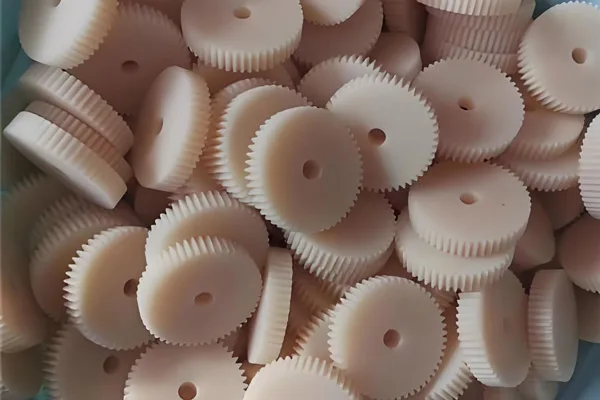
Nylon products-3
Glass Fiber Reinforced Nylon
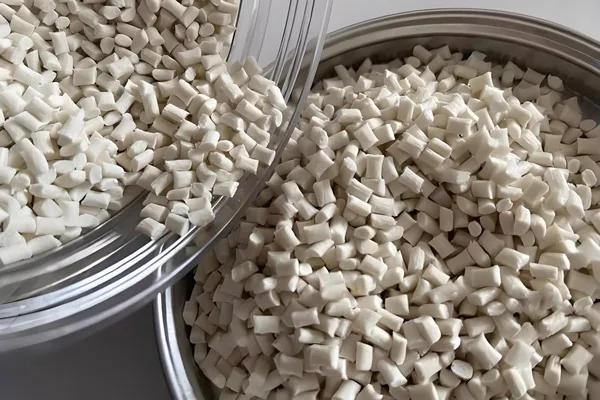
In many engineering applications nylon materials are reinforced with glass fibers in order to improve mechanical properties.
Glass fibers are mixed into the nylon material during compounding. The presence of these fibers helps increase stiffness and strength.
Typical glass fiber content ranges between 10% and 35%.
Glass fiber reinforcement can improve:
- tensile strength
• stiffness
• heat resistance
However, reinforced nylon may also become more difficult to process during injection molding because the fibers can reduce flowability.
Common reinforced grades include PA6-GF30 and PA66-GF30.
These materials are often used in structural components where higher stiffness is required.
Glass fiber reinforced nylon
General Properties of Nylon
Nylon materials are widely used because they provide a relatively balanced combination of properties.
One important property is mechanical strength. Nylon parts are capable of withstanding repeated mechanical stress.
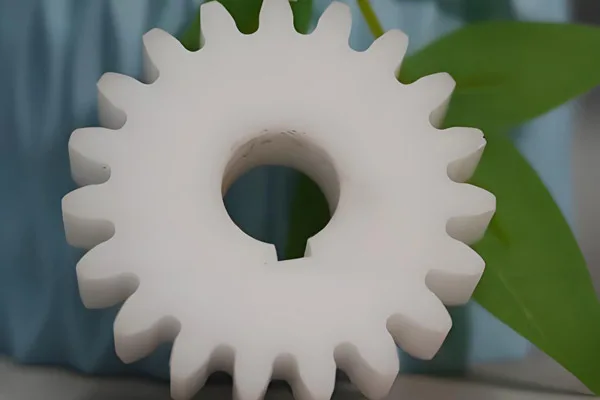
Another important characteristic is wear resistance. Nylon materials generally have relatively low friction compared with many plastics.
Because of this nylon is often used in moving mechanical components such as gears or sliding elements.
Nylon materials also offer moderate heat resistance. Many nylon grades can operate at temperatures around 100–120°C under normal conditions.
Chemical resistance is another property of nylon. Nylon materials can resist many oils, fuels and industrial chemicals.
However, nylon materials also absorb moisture from the environment. This can influence mechanical properties and dimensional stability.
Nylon gear
Applications of Nylon Materials
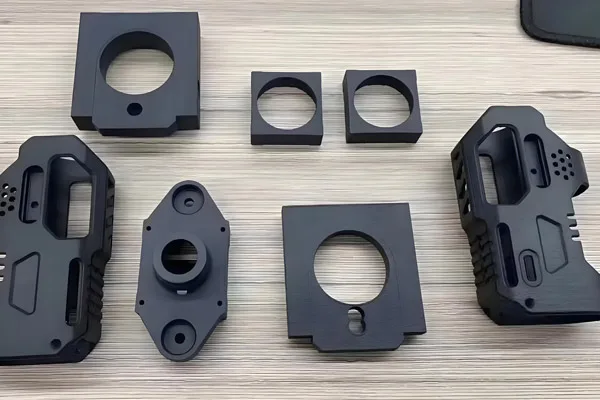
Nylon materials are used in many industries because of their durability and mechanical properties.
In automotive applications nylon can be used for connectors, brackets and engine components.
Electrical equipment may use nylon for connectors, housings and insulating components.
Industrial machinery may use nylon for gears, bearings and pump parts.
Nylon is also found in many consumer products such as cable ties, appliance components and power tool housings.
These applications demonstrate that nylon materials are used in many different types of products.
Nylon products-4
Processing Considerations
When nylon materials are processed using injection molding, several factors must be considered.
First, nylon materials generally need to be dried before molding. If moisture remains in the material it may cause defects such as bubbles or surface marks.
Typical drying temperature is around 80°C for several hours.
Mold temperature during injection molding may be between 60°C and 90°C depending on the nylon grade.
Glass fiber reinforced nylon materials may require higher injection pressure because the fibers reduce flowability.
By adjusting processing parameters such as temperature and pressure, acceptable molded parts can usually be produced.
Conclusion
Nylon materials are widely used in injection molding because they provide a combination of strength, wear resistance and chemical resistance.
Different nylon grades such as PA6, PA66 and PA12 offer different characteristics and can be selected depending on the requirements of the application.
Glass fiber reinforced nylon materials can further improve stiffness and strength.
Although nylon materials require proper drying and processing conditions, they remain an important engineering plastic in many industrial applications.