
In the fast-paced world of product development and innovation, turning ideas into tangible, functional prototypes quickly and efficiently is essential. Rapid prototyping has revolutionized the way designers, engineers, and manufacturers approach the development process, enabling the swift transition from conceptual sketches to working models. This technological advancement not only accelerates time-to-market but also enhances the quality, functionality, and user experience of new products.
This comprehensive article explores the power of rapid prototyping, its various methods, benefits, and how it is transforming industries by bridging the gap between concept and reality.
The Evolution of Rapid Prototyping
Traditionally, creating prototypes was a laborious, costly process involving manual craftsmanship, multiple iterations, and significant delays. Engineers would spend weeks or months developing molds, fixtures, and models, often facing the risk of investing heavily in a concept that might require substantial revisions.
The advent of rapid prototyping technologies changed this landscape dramatically. By leveraging computer-aided design (CAD) and additive manufacturing, the process of creating prototypes has become faster, more flexible, and more accessible. Today, rapid prototyping enables the production of physical models within days or even hours, allowing for immediate testing, validation, and refinement.
Key Methods of Rapid Prototyping
Numerous techniques are available to bring digital concepts into physical form. The choice of method depends on factors such as material requirements, complexity, accuracy, and budget.
3D Printing (Additive Manufacturing)
Overview: 3D printing is the most versatile and widely used rapid prototyping method. It builds objects layer-by-layer from digital models using various technologies such as FDM, SLA, SLS, and DLP.
Advantages:
- Rapid production of complex geometries
- Cost-effective for small batches and one-off prototypes
- Supports a wide range of materials, including plastics, resins, and even metals
Applications: Concept models, ergonomic testing, functional prototypes, and anatomical models.
CNC Machining
Overview: CNC machining is a subtractive process where material is precisely removed from a solid block to produce accurate prototypes.
Advantages:
- High accuracy and excellent surface finish
- Suitable for functional testing and high-strength materials
Applications: Metal prototypes, functional parts, and assemblies requiring tight tolerances.
Stereolithography (SLA) and Digital Light Processing (DLP)
Overview: Both techniques involve curing liquid resins with UV light to produce highly detailed and smooth prototypes.
Advantages:
- Superior surface quality and detail resolution
- Suitable for visual models and surgical guides
Applications: Aesthetic prototypes, surgical planning models, and detailed visualizations.
Vacuum Casting
Overview: This method uses silicone molds created from master patterns. Liquid resins are poured into the molds under vacuum to produce multiple copies.
Advantages:
- High-fidelity, realistic prototypes
- Suitable for small batch production and testing
Applications: Aesthetic, ergonomic, and functional testing, as well as marketing samples.
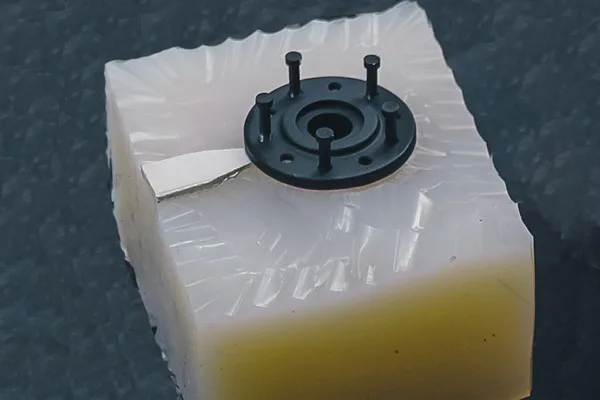
Vacuum casting parts
The Impact of Rapid Prototyping Across Industries
Rapid prototyping is transforming multiple sectors by enabling faster innovation cycles and more iterative design processes.
Automotive Industry
Automakers use rapid prototyping to develop and test new components, interior parts, and ergonomics quickly. It allows for rapid evaluation of design ideas and facilitates early detection of flaws.
Aerospace
In aerospace, where precision and safety are critical, rapid prototyping is used to create detailed models for aerodynamic testing and fit verification, reducing development costs and timelines.
Medical Devices
Medical device developers leverage rapid prototyping to produce anatomical models, surgical guides, and custom implants. It enables personalized solutions and accelerates clinical validation.
Consumer Electronics
Electronics companies use rapid prototyping to develop enclosures, circuit board housings, and ergonomic features, allowing for swift design iterations and user testing.
Benefits of Harnessing Rapid Prototyping
Faster Development Cycles: Significantly reduces the time from concept to physical model.
Cost Savings: Eliminates the need for expensive tooling during early-stage testing.
Design Flexibility: Easily modify designs based on testing feedback without substantial delays.
Enhanced Collaboration: Facilitates better communication among teams, clients, and stakeholders through tangible models.
Risk Mitigation: Identifies potential issues early, reducing costly revisions in later stages.
From Concept to Solution: The Process Workflow
1. Ideation: Generate initial sketches and CAD models.
2. Digital Design: Refine the design using CAD software, ensuring manufacturability.
3. Prototype Production: Choose suitable rapid prototyping methods to create the physical model.
4. Testing & Evaluation: Perform functional, ergonomic, and aesthetic testing.
5. Iteration: Refine the design based on feedback and produce improved prototypes.
6. Final Validation: Develop prototypes that closely resemble the final product for regulatory approval, marketing, or pre-production testing.
Future Trends and Innovations
The power of rapid prototyping continues to grow with technological advancements:
Bioprinting: The ability to print living tissues for regenerative medicine.
Multi-Material Printing: Combining different materials in a single build for more functional prototypes.
Hybrid Manufacturing: Integrating additive and subtractive processes for optimal results.
Artificial Intelligence: Automating design optimizations based on testing data.
Conclusion
Harnessing the power of rapid prototyping is transforming the way products are designed, tested, and brought to market. It bridges the gap between concept and reality, enabling faster innovation, reduced costs, and better end-user experiences.
As technology advances, the scope and capabilities of rapid prototyping will continue to expand, empowering industries to push the boundaries of what’s possible. Whether developing a new medical device, a revolutionary consumer product, or an aerospace component, rapid prototyping remains an invaluable tool for turning visionary ideas into tangible, functional solutions that meet real-world needs.