
In the fast-paced world of manufacturing and engineering, the ability to consistently produce high-quality, accurate components sets industry leaders apart from their competitors. Central to achieving this level of excellence is CNC machining — Computer Numerical Control machining — a technology that has revolutionized how products are designed, manufactured, and refined. For industry giants across sectors, CNC machining is more than just a tool; It is a strategic asset that underpins their success and drives innovation.
The Significance of Precision in Modern Industry
Precision manufacturing is critical in sectors such as aerospace, automotive, medical devices, electronics and defense. These industries require components that meet exact specifications, perform reliably in extreme conditions, and adhere to strict safety standards. Even minor deviations can lead to catastrophic failures, costly recalls, or damage to brand reputation.
Industry giants recognize that achieving this level of accuracy requires advanced manufacturing techniques. CNC machining offers unparalleled accuracy, repeatability and flexibility, making it the preferred choice for producing complex parts with tight tolerances.
Why Industry Leaders Depend on CNC Machining
Achieving Unrivaled Precision and Repeatability
Operating on meticulously programmed digital instructions, CNC machines enable the production of complex shapes with exceptional accuracy. Once optimized, these machines can replicate parts consistently over thousands of units, ensuring uniformity across batches. This repeatability is crucial for maintaining strict quality standards and facilitating seamless assembly in complex systems.
Empowering Complex and Innovative Designs
Modern products often feature intricate geometries that challenge traditional manufacturing methods. CNC machining can produce highly complex parts with intricate internal features, micro-holes and contours that would be impossible or prohibitively expensive to fabricate by hand. This capability allows industry giants to push the boundaries of innovation and create cutting-edge products that stand out in a competitive marketplace.
Accelerating Development Cycles
Speed is a critical factor in staying ahead of the competition. CNC machining enables rapid prototyping, allowing engineers to quickly test and refine designs. By reducing the lead time from concept to production, companies can accelerate product launches, respond quickly to customer feedback, and adapt to market trends.
Enhancing Flexibility and Customization
CNC machines are highly adaptable, capable of switching between different parts and designs with minimal setup time. This flexibility is essential for industries that require tailored solutions or small-batch production. It also supports on-demand manufacturing, reducing inventory costs and enabling just-in-time delivery.
Long-Term Cost Savings
While the initial investment in CNC machinery can be substantial, the long-term benefits are significant. Reduced material waste, minimized rework, lower labor costs and higher throughput all contributed to the improved profitability. For industry giants, these efficiencies translate into competitive pricing and better market positioning.
Strategic Implementation of CNC Machining
Leading brands are not merely adopting CNC technology-they are integrating it into a comprehensive strategic framework:
- Invest in Advanced CNC Systems: High-precision, multi-axis CNC machines equipped with automation, tool changers and smart sensors ensure optimal performance with minimal downtime.
- Training and Skilled Workforce Development: To harness the full potential of CNC technology, companies invest in training their workforce, ensuring operators and engineers understand both the technical and strategic implications.
- Integrating CAD/CAM and Digital Twin Technologies: Combining CNC with sophisticated design software and digital twin simulations enables precise planning, reduces errors and streamlines manufacturing workflows.
- Implementing Quality Control and Inspection: Advanced metrology tools and real-time monitoring ensure that components meet tight tolerances, maintaining quality standards across production runs.
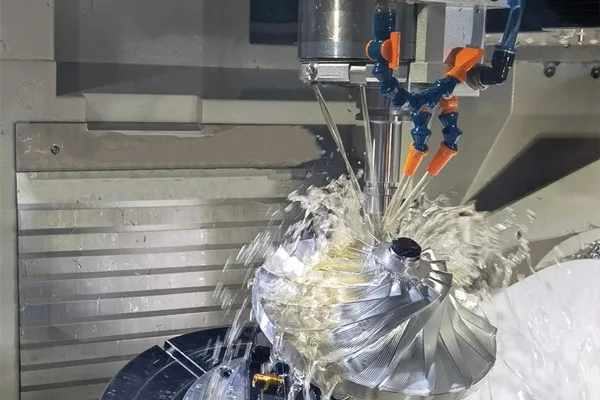
CNC machining
The Future of CNC Machining in Industry
Automation and Industry 4.0 Integration:
Smart factories leverage IoT-enabled CNC machines that communicate, self-diagnose issues, and optimize operations autonomously. This integration goes beyond simple machine-to-machine communication. In an Industry 4.0 environment, a CNC machine is a data node. It feeds real-time information—spindle load, vibration, temperature, cycle times—back to a central Manufacturing Execution System (MES). When MES detects that a machine is running slowly due to tool wear, it can automatically schedule a tool change, queue the next job, and notify logistics to prepare the raw material. This closed-loop system minimizes downtime and maximizes overall equipment effectiveness (OEE). For global brands, this data is aggregated across multiple facilities, allowing them to benchmark performance and instantly transfer best practices from the best performing plants to all others.
Additive and Hybrid Manufacturing:
Combining CNC subtractive techniques with additive manufacturing opens new horizons for complex, lightweight, and customized components. Hybrid manufacturing represents the best of both worlds. Additive manufacturing can build near-net shapes and complex internal lattices that reduce weight, while subtractive CNC processes follow up to machine critical mating surfaces, bolt holes, and precision threads that additive alone cannot achieve with sufficient accuracy. This synergy is particularly valuable in repairing high-value components. For example, a damaged turbine blade can have material deposited onto the worn tip via laser cladding, and then a CNC machine re-contours the tip back to its original specification. This extends the life of expensive components and reduces waste.
Use of Advanced Materials:
CNC machining is evolving to handle high-performance materials such as composites, titanium and ceramics, expanding applications in demanding industries.
The drive for superior performance in extreme environments has accelerated the adoption of advanced materials that cannot be efficiently processed by conventional machining. These include:
- Carbon Fiber Reinforced Polymers (CFRP): Valued for their exceptional strength-to-weight ratio but challenging due to their abrasive nature. Successful machining requires diamond-coated tooling and a high-speed, low-feed strategy to prevent delamination and fiber pullout.
- Ceramic Matrix Composites (CMCs): Used in the hottest sections of jet engines where metals would fail. Their hardness and brittle nature necessitate non-traditional approaches such as ultrasonic machining or laser-assisted CNC processes to achieve the desired geometry without microcracking.
- Titanium and Superalloys: While more common, these materials generate intense heat and work-harden rapidly, demanding rigid setups, high-pressure coolant systems, and optimized toolpaths.
Mastery of these materials allows industry leaders to overcome critical performance barriers. By investing in specialized CNC capabilities, companies secure their role as exclusive, high-value suppliers for next-generation aerospace, defense, and energy platforms.
Artificial Intelligence and Machine Learning:
AI-driven optimization of machining parameters enhances precision, reduces cycle times, and predicts maintenance needs. AI is moving CNC machining from reactive to predictive. Machine learning algorithms analyze historical production data to recommend optimal feed rates and spindle speeds that minimize chatter and tool deflection. This not only improves the finish of the surface, but also extends the life of the tool. In addition, predictive maintenance algorithms monitor subtle changes in spindle vibrations or axis-driven currents. By identifying anomalies that precede breakdowns, the system can alert maintenance teams to service a component during scheduled downtime, preventing catastrophic and costly outages from unexpected failures during critical production runs.
Conclusion
In today’s hypercompetitive environment, precision is not just a technical specification – it is a strategic advantage that underpins innovation, quality and operational excellence. Industry giants recognize that CNC machining is more than a manufacturing process – it is a vital component of their competitive strategy. By leveraging the latest in CNC technology, these companies ensure their products meet the highest standards, accelerate development cycles, and maintain their leadership positions.
As technology advances, the importance of CNC machining as a central strategic tool will only grow. For brands aiming to stay ahead in the race for innovation and market dominance, embracing CNC machining is not optional – it is essential.